The scientific question about eating genetically engineered food and the political question about how it is grown are two different arguments, and running them together is why this topic stays unresolved. On the first, the evidence is unusually consistent: no health difference has been substantiated between currently commercialized GE crops and conventionally bred ones. On the second (herbicide use, resistant weeds, who owns the seed), there are legitimate disagreements that no safety study settles.
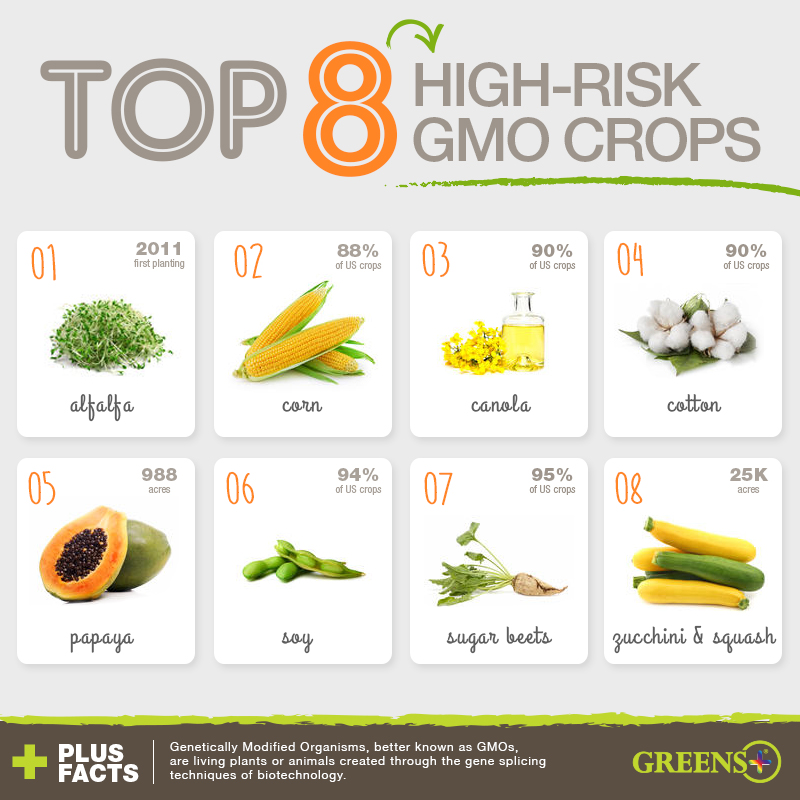
The article that stood here listed eight “high-risk” crops and implied that risk meant risk to the person eating them. It does not. That framing is corrected below.
What is actually genetically engineered in the United States
The list is short, and shorter than most people assume. USDA’s Agricultural Marketing Service maintains the official List of Bioengineered Foods: alfalfa, apple, canola, corn, cotton, eggplant, papaya, pineapple, potato, salmon, soybean, summer squash, sugarbeet and sugarcane.
Adoption within those crops is high. USDA’s Economic Research Service reported for 2025 that herbicide-tolerant varieties accounted for 96 percent of soybean acres, about 92 percent of corn acres and 93 percent of upland cotton acres, with insect-resistant Bt traits on 87 percent of corn and 91 percent of cotton.
What that means at the grocery store is narrower than it sounds. Most of that corn and soy becomes animal feed, ethanol, refined oil and sweetener. There is no genetically engineered wheat, rice, oat, tomato, strawberry, blueberry, lettuce, carrot or onion in US commercial production. A “non-GMO” claim on a bag of oats describes a category that does not exist.
Where the “high-risk” list comes from
The eight-crop list in the old article was taken from the Non-GMO Project, a certification program. In its own definition, a high-risk input is one where a genetically modified version is widespread in the supply chain, so an ingredient sourced from it is likely to contain GE material unless the supply chain is segregated and tested.
That is a sourcing and traceability category. It is a statement about the probability that a shipment of corn contains engineered corn, not a statement about what happens to a person who eats it. Reproducing the list under a headline about risk, as this blog previously did, changes its meaning entirely. That was a misreading and it is retracted.
What the major scientific reviews concluded
The key document is the 2016 report from the National Academies of Sciences, Engineering, and Medicine, Genetically Engineered Crops: Experiences and Prospects. The committee reviewed nearly 900 research publications, heard from 80 speakers across three public meetings and 15 webinars, and worked through more than 700 public comments.
Its central finding was that there was no substantiated evidence of a difference in risks to human health between the GE crops then commercially available and their conventionally bred counterparts. The committee also compared long-term population data from countries that adopted GE crops with countries that did not, and found no corresponding divergence in disease patterns.
Independently, the European Commission’s A decade of EU-funded GMO research, summarizing 50 publicly funded projects run between 2001 and 2010 on environmental impact, food safety and risk assessment, concluded that biotechnology and GE organisms are not per se more risky than conventional plant breeding technologies. FDA’s position on the products it has evaluated, including GE salmon and pigs, has been that they are as safe and nutritious as their non-GE counterparts.
The consistency here is worth stating plainly, because it is unusual. Independent bodies with different funding, different regulatory cultures and different political pressures reached the same conclusion about the safety of eating these specific crops.
The glyphosate question is a separate question
Most GE acreage is herbicide-tolerant, which means the trait exists to allow spraying a herbicide (usually glyphosate) over the growing crop. Whether that herbicide poses a risk is a pesticide toxicology question, not a genetic engineering question, and it deserves to be argued on its own terms.
The regulatory bodies disagree with the cancer agency. IARC classified glyphosate as probably carcinogenic to humans in 2015. EPA has held since 2017 that glyphosate is not likely to be carcinogenic to humans, and is updating that assessment. EFSA concluded in 2023 that its peer review identified no critical areas of concern, while flagging data gaps on one impurity, on consumer dietary risk and on aquatic plants.
Part of the gap is definitional. IARC assesses hazard: whether a substance can cause cancer under some conditions. EPA and EFSA assess risk under expected real-world exposure. Those two exercises can legitimately produce different answers about the same chemical, and neither is dishonest.
The regulatory picture is also unsettled rather than closed. The Ninth Circuit vacated the human-health portion of EPA’s 2020 interim decision in 2022, EPA subsequently withdrew that decision, and its updated human health risk assessment remains in progress. Anyone claiming this question is definitively settled in either direction is overstating.
What the agronomic record shows
A meta-analysis by Klumper and Qaim in PLOS ONE in 2014, pooling 147 original studies, reported that GE technology adoption was associated with a 37 percent reduction in chemical pesticide use, a 22 percent increase in crop yields and a 68 percent increase in farmer profits, with larger gains for insect-resistant crops and in developing countries. The authors noted that publication and selection issues affect this literature and that gains varied widely by crop and setting.
The National Academies committee reached a more cautious conclusion on yield specifically, finding no evidence that GE crops had changed the underlying rate of yield increase over decades, even while reducing crop losses in particular years and places.
The clearest downside is resistance. The International Herbicide-Resistant Weed Database records 548 unique cases of herbicide-resistant weeds worldwide across 275 species, with resistance documented to 21 of the 31 known herbicide sites of action. Heavy reliance on a single herbicide selects for weeds that survive it. That is a predictable consequence of the management system, and it has arrived.
How GE foods are labeled in the US
The National Bioengineered Food Disclosure Standard replaced the patchwork of state laws. It defines bioengineered food as food containing detectable genetic material modified by certain laboratory techniques that could not be achieved through conventional breeding or found in nature, and mandatory compliance began on January 1, 2022.
Two features of the standard draw criticism, and the criticism is reasonable. Disclosure can be made by text, symbol, digital link, or a phone number, and a QR code is a poorer disclosure than a printed sentence for anyone without a smartphone in the aisle. And because the definition turns on detectable modified genetic material, highly refined ingredients such as soybean oil and beet sugar generally fall outside it, even though they came from engineered crops. Beet sugar is the clearest example, and it raises a separate set of questions about sugar and the sweeteners marketed as alternatives to it.
The National Academies committee separated these questions carefully. It concluded that mandatory labeling was not justified on public-health grounds, while acknowledging that transparency and consumer choice are legitimate social claims that a safety assessment does not answer.
Where legitimate concerns remain
Three, and none of them is about whether the food is safe to eat.
Concentration is the first. USDA’s Economic Research Service reported that two companies, Corteva and Bayer, supplied more than half of US retail seed sales of corn, soybeans and cotton in 2018-20, with four firms dominating combined seed and agricultural chemical markets. Patented traits bundled with proprietary chemicals give a small number of firms considerable leverage over what farmers plant and what they spray. That is a competition problem regardless of the technology’s safety.
Resistance management is the second. Bt traits and glyphosate tolerance are durable only if used within a system that slows adaptation, and the resistance data above shows that system has not held everywhere.
Transparency is the third. The disclosure standard’s refined-ingredient exemption and its digital-link option make it weaker than it appears. Wanting to know what is in food, and being able to read it on the package, is not an anti-science position.
Common questions
Are GMO foods safe to eat?
Every major scientific review that has examined the question has reached the same conclusion. The 2016 National Academies report, drawing on nearly 900 publications, found no substantiated evidence of a difference in health risk between commercially available GE crops and conventionally bred ones, and the European Commission’s research program reached a compatible conclusion.
Does “non-GMO” on a label mean anything?
It depends on the crop. On corn, soy, canola, sugar, papaya or summer squash the claim describes a genuine sourcing decision. On wheat, oats, rice, most fruits and most vegetables, no engineered version is commercially grown in the US, so the claim distinguishes the product from nothing.
Is organic the same as non-GMO?
Certified organic prohibits genetic engineering as a production method, so organic products are non-GE by rule. The reverse does not hold: a non-GMO label says nothing about pesticide use, soil practice or livestock standards. The organic certification rules are covered separately.
Do GE crops mean more herbicide is sprayed?
The pattern differs by trait. Insect-resistant Bt crops are associated with reduced insecticide applications; herbicide-tolerant crops shifted herbicide use toward glyphosate and, as resistant weeds spread, back toward older chemistries and higher total volumes in some regions. Aggregate pesticide figures that combine both traits obscure this, in either direction.
Where this leaves it
On safety, the evidence is about as settled as food science gets, and treating genetic engineering as a contaminant is not supportable. On corporate concentration, resistance management and labeling clarity, the arguments are real and worth having on their own merits rather than being smuggled in under a health claim.
Greens Plus builds its blends from the plant ingredients described here, and the full ingredient list and sourcing detail for each product are published at greensplus.com for anyone who wants to check rather than take a label’s word for it.
About the Author