Organic certification delivers a few real, measurable differences: fewer pesticide residues, lower cadmium, and a farming system with its own environmental rules. It does not deliver most of what it gets credited for, and the residue difference matters far less than the marketing around it suggests. For nearly everyone, the choice between an organic apple and a conventional one is less consequential than whether the apple gets eaten.
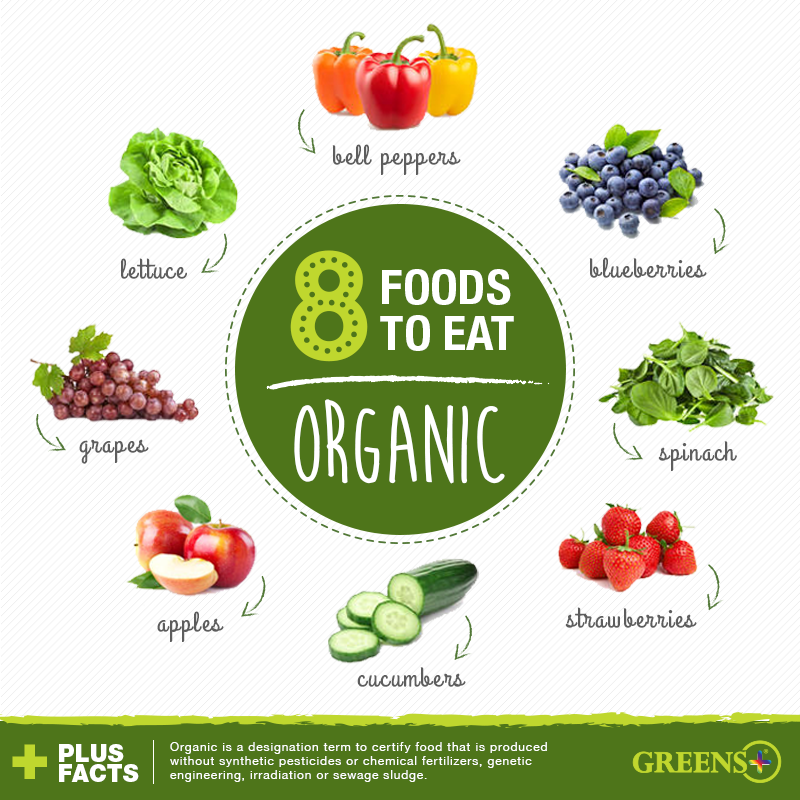
The article that stood here listed eight foods to “always” buy organic and said the conventional versions may be “covered in pesticides that can cause major health concerns.” That claim came from an advocacy group’s ranking rather than from exposure data, and it does not survive contact with the exposure data. It is retracted below, along with the implication that organic means pesticide-free.
What the USDA organic seal certifies
USDA organic is a process standard enforced by accredited certifying agents. It governs how food is grown and handled, not what a finished sample contains. Synthetic fertilizers, sewage sludge, irradiation and genetic engineering are prohibited, as are routine antibiotics and growth hormones in livestock.
The labeling tiers matter more than most shoppers realize. Under the USDA labeling standards, “100 percent organic” means exactly that. Plain “organic,” which is what most packaged products carry, means at least 95 percent organic ingredients by weight excluding salt and water. “Made with organic ___” means at least 70 percent and cannot display the seal at all. Below 70 percent, only individual ingredients can be identified as organic.
Because certification audits practices rather than testing every lot, the seal is a statement about method. It is a reasonable proxy for lower residues, as the data below shows. It is not a guarantee about any particular piece of fruit.
Organic farms use pesticides
This is the single most common misunderstanding about organic food. The governing principle in the National List is that natural substances are allowed unless specifically prohibited, and synthetic substances are prohibited unless specifically allowed. A substantial number of synthetics are specifically allowed.
Section 205.601 of the organic regulations permits, among others, elemental sulfur, lime sulfur, fixed coppers including copper hydroxide and copper oxychloride, copper sulfate, horticultural and dormant oils, insecticidal soaps, sucrose octanoate esters, hydrogen peroxide, potassium bicarbonate and polyoxin D zinc salt. Non-synthetic pest controls such as botanical and microbial products are allowed by default.
Some of these are not benign. The regulation’s own annotation on copper sulfate requires that it “must be used in a manner that minimizes accumulation of copper in the soil,” because copper is persistent and does accumulate. Whether a compound is natural or synthetic tells you very little about its toxicity or its environmental behavior. The organic system is a different pest-control regime, not the absence of one.
The nutrition question, and why two large reviews disagreed
Two systematic reviews dominate this literature and they reached different-sounding conclusions. Both are worth understanding, because the disagreement is instructive rather than embarrassing.
The Stanford review, published by Smith-Spangler and colleagues in Annals of Internal Medicine in 2012, pooled 17 human studies and 223 studies of food composition. It found the published literature lacked strong evidence that organic foods are significantly more nutritious. Phosphorus was higher in organic produce without clinical significance, and phenolic compounds showed no meaningful difference. It did find a 30 percent lower risk of detectable pesticide residues in organic produce, and a 33 percent lower risk of isolating bacteria resistant to three or more antibiotics from organic chicken and pork.
The Newcastle meta-analysis, led by Baranski and published in the British Journal of Nutrition in 2014, pooled 343 publications and reported organic crops higher in phenolic acids by 19 percent, flavonols by 50 percent, anthocyanins by 51 percent and flavanones by 69 percent, with cadmium 48 percent lower and pesticide residues detected about four times less often.
The two reviews were asking slightly different questions. Stanford weighted nutrients with established human requirements; Newcastle weighted polyphenol classes, for which no dietary requirement exists and no clinical endpoint was measured. Newcastle included far more studies, and reported heterogeneity above 75 percent for most composition parameters, with signs of publication bias for roughly half of them. Its funding declaration lists the European Community’s Sixth Framework Programme and the Sheepdrove Trust, a charity connected to organic farming, which the authors state had no influence on the work.
What the residue data actually shows
The USDA’s Pesticide Data Program buys food at retail and tests it. In the 2024 annual summary, 9,872 samples across 19 commodities were analyzed and more than 99 percent had residues below the benchmark levels EPA sets. The comparable finding has held year after year.
Tolerances are not the same as toxicity thresholds, so the more useful analysis compares actual dietary exposure to a reference dose. Winter and Katz did that in the Journal of Toxicology in 2011, modeling exposure to the ten most frequently detected residues on each of twelve commonly criticized commodities. Only one of 120 exposure estimates exceeded 1 percent of the EPA chronic reference dose. Seventy-five percent were below 0.01 percent of it, and in more than 90 percent of cases the reference dose exceeded mean exposure by over a thousandfold.
Both things can be true at once. Organic produce carries detectable residues less often, and conventional residues sit far below the levels at which effects are expected. A difference can be real and still be small in the terms that matter.
The “Dirty Dozen” and the objection to it
The Environmental Working Group publishes an annual ranking of produce by pesticide detection, and the eight-item list in the old version of this article was drawn from it. The ranking uses abundance, diversity, intensity and a toxicity metric derived from concentration relative to no-adverse-effect levels.
The core scientific objection is that a ranking built on detections does not estimate what anyone actually eats. Detection limits have improved by orders of magnitude over three decades, so more residues are found now at concentrations that were previously invisible and remain far below any effect level. Winter and Katz concluded the methodology lacked a basis for its risk implications and found no meaningful benefit from substituting organic forms of those specific commodities.
There is a second-order concern. Survey work reported in Nutrition Today found that low-income shoppers exposed to “dirty” messaging about specific produce items said they would be less likely to buy those items — and did not say they would buy the organic version instead. With CDC data from 2019 showing 12.3 percent of US adults met fruit recommendations and 10.0 percent met vegetable recommendations, a message that makes produce feel unsafe carries a real cost. The size of that shortfall is the subject of the separate piece on fruit and vegetable intake.
Where this evidence is genuinely weak
Composition comparisons are noisy. Cultivar, soil, weather, ripeness at harvest and time since harvest all move nutrient numbers more than farming system does, which is why heterogeneity in these meta-analyses runs so high. A study finding 50 percent more anthocyanins in organic berries may be describing a different variety picked on a different day.
Long-term health-outcome studies are observational and heavily confounded. People who buy organic food tend to be wealthier, more educated, more physically active and less likely to smoke. No randomized trial has assigned people to eat organic or conventional diets for years and measured what happened, and none is likely to be run.
Funding cuts in both directions. Advocacy organizations produce rankings that favor organic; trade associations fund critiques of those rankings. Reading either without noting who paid is a mistake, and that applies to the sources cited above as much as to any other.
A reasonable way to decide
If organic produce fits the budget and matters to you for environmental or farm-labor reasons, those are defensible grounds and the evidence for lower residues and lower cadmium supports part of the case. Buying organic for measurably better nutrition is not well supported.
If the budget is tight, the least defensible move is buying less produce because a list said some of it was dirty. Buy what is affordable and eat more of it. Wash produce under running water before eating, which removes surface residues and, more importantly, soil and microbes. Where storage is the limiting factor, how produce is stored affects both waste and nutrient retention more than the organic decision does.
Frozen produce is worth mentioning here because it is usually cheaper, keeps longer, and is nutritionally comparable to fresh. Organic and conventional frozen options both exist. The related question of what genetic engineering does and does not mean is covered separately, since organic certification excludes it by rule rather than by evidence of harm.
Common questions
Does washing remove pesticide residues?
Partly. Rinsing under running water removes a meaningful share of surface residues, and rubbing or scrubbing firm produce removes more. It does not remove systemic residues taken up into the plant. FDA advises plain running water and specifically advises against soap, detergent or bleach, which can be absorbed and are not intended for consumption.
Is organic produce more nutritious?
Not in any way established to matter. The Stanford review found no strong evidence of nutritional superiority; the Newcastle review found higher concentrations of several polyphenol classes, which have no established dietary requirement and were not linked to any measured health outcome in that analysis.
What does “organic” mean on a packaged food, as opposed to fresh produce?
It means at least 95 percent of the ingredients by weight, excluding salt and water, are certified organic. A product labeled “made with organic oats” meets a 70 percent threshold and is not permitted to display the USDA seal.
Are pesticide residues on conventional produce regulated?
Yes. EPA sets tolerances for each pesticide-commodity pair, FDA and USDA monitor compliance, and USDA’s Pesticide Data Program publishes annual results. The 2024 summary found more than 99 percent of samples below those benchmarks.
Where this leaves it
Organic is a legitimate agricultural standard with documented differences in residues, cadmium and antibiotic-resistance patterns, and it is not a health upgrade the evidence can currently justify. Anyone selling it as one — including brands that sell organic products — is going beyond what the studies support.
Greens Plus makes green superfood powders and bars, some of which use certified organic ingredients, and the certification status of each is listed on the product pages at greensplus.com.
About the Author