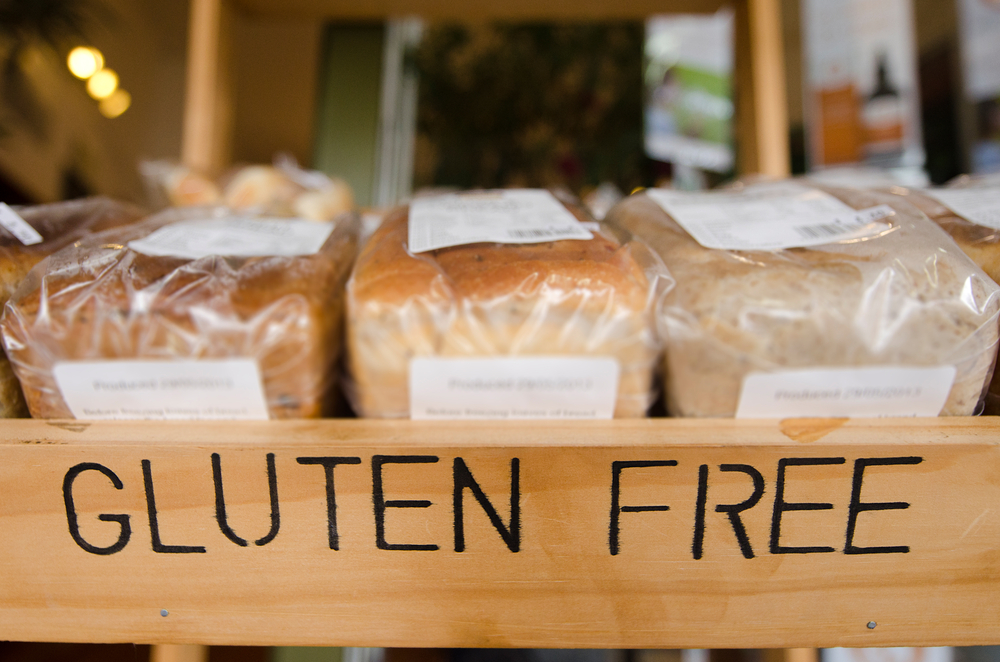
In the United States, “gluten-free” on a food label is a defined regulatory term, not a marketing phrase. Under FDA rules the food must contain less than 20 parts per million of gluten, and three other conditions have to be met as well. The rule is voluntary: no manufacturer has to make the claim, but any label that does make it has to comply. This article sets out what the standard covers, the 2020 addition for fermented and hydrolyzed foods, how oats are handled, what a “may contain wheat” warning is worth, and why the same words on a deli meat or a beer are governed by an entirely different agency.
What “gluten-free” legally means
The FDA published its final rule on August 2, 2013, with compliance required from August 5, 2014. It is codified at 21 CFR 101.91.
A food may be labeled gluten-free if it is inherently free of gluten, or if it does not contain any of the following: an ingredient that is a gluten-containing grain, such as spelt wheat; an ingredient derived from a gluten-containing grain that has not been processed to remove gluten; or an ingredient derived from such a grain and processed to remove gluten, where that use still results in 20 ppm or more of gluten in the finished food. On top of those conditions, any unavoidable gluten present must be under 20 ppm.
Twenty parts per million is 20 milligrams of gluten per kilogram of food. The FDA’s own explanation is that this was the lowest level that scientifically validated analytical methods could reliably detect, and that most people with celiac disease tolerate trace amounts below it.
Four claims, one standard
“Gluten-free,” “no gluten,” “free of gluten” and “without gluten” all carry exactly the same regulatory meaning under the rule. There is no hierarchy among them and no FDA symbol. Several other phrases appear on packaging and mean something different, or nothing at all.
| What the label says | What it legally means |
|---|---|
| Gluten-free / No gluten / Free of gluten / Without gluten | Under 20 ppm gluten and the three ingredient conditions of 21 CFR 101.91. All four are identical in law. |
| Certified gluten-free | A third-party program, not the FDA. The Gluten-Free Certification Organization certifies to 10 ppm, or the local threshold if stricter. |
| Contains wheat | Mandatory allergen declaration. Wheat is an ingredient. |
| Wheat-free | No wheat. Says nothing about barley, rye or malt, all of which contain gluten. |
| May contain wheat / Made on shared equipment | Voluntary and unregulated. No threshold, no required testing. |
| Processed to remove gluten (alcohol) | TTB wording for products fermented or distilled from gluten grains. Gluten content cannot be verified. |
Where 20 ppm came from, and how cross-contact happens
The threshold is a compromise between what instruments can measure and what the tolerance literature supports. A 2007 double-blind trial in the American Journal of Clinical Nutrition assigned adults with celiac disease in remission to 0, 10 or 50 mg of gluten daily for 90 days. The 50 mg group showed measurable deterioration in intestinal architecture, and the authors concluded that daily intake should be kept below 50 mg. A person eating 500 g of food a day at exactly 20 ppm would take in 10 mg.
Cross-contact is what the threshold is mostly protecting against. Gluten arrives through shared milling and packing equipment, shared conveyors and bulk bins, rotating production between wheat and non-wheat runs, and airborne flour dust that settles across a bakery. In a kitchen it arrives through shared toasters, shared fryer oil, shared colanders and wooden boards. None of that requires an ingredient list to change, which is one reason ingredient panels alone are a poor guide, as our piece on what to look for in an energy bar also finds.
Fermented and hydrolyzed foods: the 2020 rule
The 2013 rule left a gap. Fermentation and hydrolysis break gluten into fragments that the standard R5 ELISA assay cannot reliably quantify, so a laboratory result on yogurt, sauerkraut or beer does not mean what it means on a cracker.
The FDA closed this with a final rule published on August 13, 2020, effective October 13, 2020, with a compliance date of August 13, 2021. It covers fermented and hydrolyzed foods including yogurt, cheese, sauerkraut, pickles, green olives, hydrolyzed plant proteins, and the beers and wines that fall under FDA rather than TTB jurisdiction.
Because testing the finished product does not work, compliance is records-based. A manufacturer making the claim must keep records showing that the food or its ingredients met the gluten-free definition before fermentation or hydrolysis, that cross-contact during processing was evaluated and controlled where necessary, and must retain that documentation for at least two years and make it available to FDA on inspection. Distilled foods such as distilled vinegar are handled differently again: compliance is assessed by verifying the absence of protein using validated methods, since distillation leaves protein behind.
Oats and the purity protocol question
Oats contain no gluten. They are, however, routinely contaminated with wheat, barley and rye: in rotation cropping, at harvest, in transport, and at mills that handle several grains.
The FDA does not require any particular sourcing method. Oats may appear in a gluten-free food as long as the finished food is under 20 ppm. Two approaches exist in practice. Purity protocol oats are grown, harvested, stored, transported and milled under a dedicated system designed to prevent contact with gluten grains at every step. The alternative is conventional oats cleaned by mechanical and optical sorting and then tested.
Both can produce compliant product, and the disagreement is about sampling rather than intent. Contamination in a lot of oats is heterogeneous: a few stray kernels are not evenly distributed through a silo, so a passing result on one sample is weaker evidence than a passing result on a homogeneous food. That is the argument advocates of purity protocol sourcing make. Separately, a minority of people with celiac disease react to avenin, the oat protein itself, which is why the American College of Gastroenterology guideline advises introducing oats deliberately and with follow-up rather than assuming they are neutral.
“May contain wheat,” and where the rules are weaker than they look
Precautionary statements (“may contain wheat,” “made on equipment shared with wheat,” “made in a facility that also processes wheat”) are entirely voluntary. No regulation defines them, sets a threshold for them, or requires any testing behind them. Their absence means nothing and their presence means nothing quantitative.
The FDA does permit a food to carry both a gluten-free claim and an advisory statement, provided the food genuinely meets the standard and both statements are truthful and not misleading. A package saying gluten-free plus “made in a facility that also processes wheat” is therefore held to 20 ppm. A package saying only the advisory is held to nothing.
Three further limits are worth knowing. Testing is not required at all: manufacturers may rely on supplier certificates of analysis, in-house testing, third-party laboratories or a certification program, and FDA enforcement is largely after the fact. There is no government gluten-free logo, so any symbol on a package belongs to a private scheme with its own rules. And the rule governs packaged food labels; restaurant menu claims are not policed the same way, which is why cross-contact in a kitchen is the practical risk for most people with a diagnosis. Our piece on supplement quality and manufacturing covers the same gap between a claim and an audit.
Meat, poultry and alcohol: other agencies, other rules
21 CFR 101.91 applies to FDA-regulated food. It does not cover everything in a supermarket.
Meat, poultry and processed egg products are regulated by the USDA’s Food Safety and Inspection Service, a division the FDA acknowledges in its own guidance. A gluten-free claim on a package of sausage or a chicken entrée is a voluntary special claim under FSIS label oversight, and must be truthful and not misleading; FSIS has looked to the FDA definition in evaluating it. In practice, a deli meat and the cheese beside it on the same counter are governed by two different agencies.
Alcohol is the third jurisdiction. Wine above 7 percent alcohol, distilled spirits, and malt beverages made from malted barley and hops fall under the Alcohol and Tobacco Tax and Trade Bureau; beers made without malted barley or hops fall back to FDA. Under TTB Ruling 2014-2, “gluten-free” may be used only for products made without gluten-containing ingredients and with measures against cross-contact. A product fermented or distilled from gluten grains and then treated to reduce gluten may not use the term at all. It must instead carry a qualifying statement: for fermented products, that the product was fermented from grains containing gluten and processed, treated or crafted to remove gluten, that the gluten content cannot be verified, and that the product may contain gluten.
Common questions
Is a product tested before it can say gluten-free?
Not necessarily. The FDA requires the food to meet the standard but does not mandate testing, and manufacturers may substantiate compliance with supplier documentation, in-house checks, outside laboratories or certification. If verified testing matters to you, a third-party certification mark is the signal to look for, not the plain claim.
Does “wheat-free” mean gluten-free?
No, and this is the most consequential confusion on a label. Wheat-free means no wheat. Barley, rye, malt, malt extract, malt vinegar and brewer’s yeast all contain gluten and are all compatible with a wheat-free claim.
Can something be gluten-free and still say “may contain wheat”?
Yes. The FDA allows both statements together as long as the food actually meets the under-20-ppm standard. The gluten-free claim is the enforceable one; the advisory is a voluntary disclosure about the facility, not a measurement of the food.
Is beer labeled “crafted to remove gluten” safe with celiac disease?
TTB requires that wording precisely because the gluten content cannot be verified by available methods. Beer brewed from naturally gluten-free grains such as sorghum, rice or millet may carry a gluten-free claim; beer brewed from barley and then treated may not. Anyone with a diagnosis is on firmer ground with the first category. For the underlying condition and how it is diagnosed, see our article on wheat, gluten and who needs to avoid them.
Reading a label in practice
The short version: the four gluten-free phrasings are interchangeable and enforceable, certification marks are stricter than the federal floor, precautionary statements carry no legal weight, and meat, poultry and alcohol answer to different agencies. Anyone who needs the diet for medical reasons should treat the packaged-food rules as reliable and restaurant claims as a conversation rather than a standard.
Products that are inherently free of gluten-containing grains still have to be manufactured carefully to stay that way. Greens Plus has been making green superfood blends since 1989.
About the Author