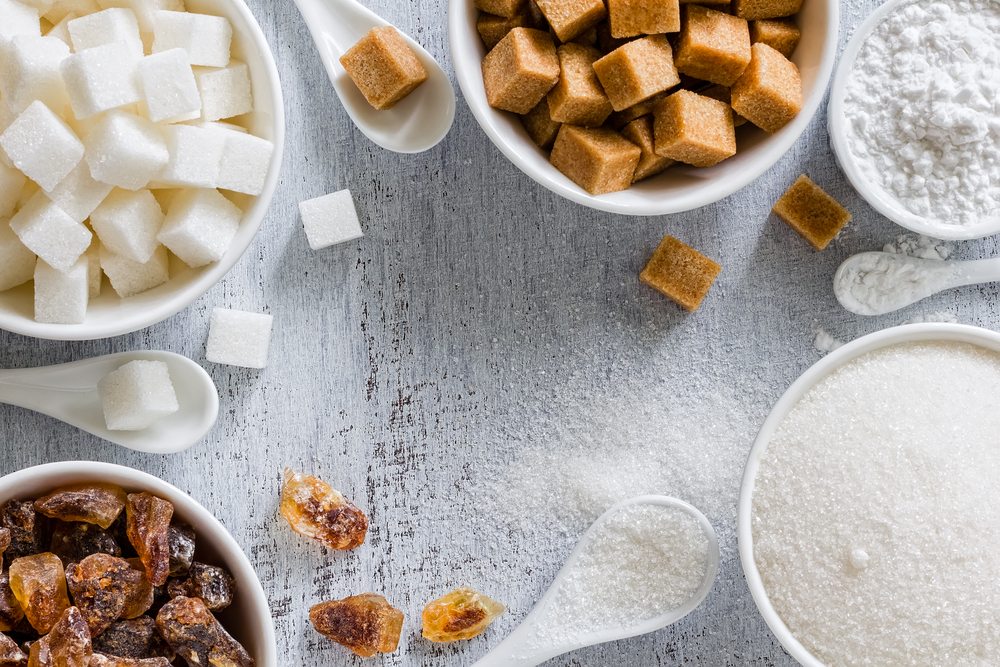
The useful comparison for sucralose is not sweetener against nothing. It is sweetener against the sugar it replaces, and against drinking water instead. Against sugar, the randomized evidence shows a small weight advantage. Against water, it shows nothing. Against the claim that sucralose is a dangerous chemical that should be avoided, the toxicology does not support the alarm, but neither does it support treating it as a health product.
The article that stood here said sucralose is “an insecticide known to be dangerous to living organisms” and that Splenda “can kill friendly bacteria in the intestines.” Both statements are retracted below. They were wrong when written and they are wrong now.
What sucralose is, and what it is not
Sucralose is a sucrose molecule with three hydroxyl groups replaced by chlorine atoms. That substitution makes it roughly 600 times sweeter than sugar and largely resistant to digestion. FDA approved it for 15 specific food categories in 1998 and as a general-purpose sweetener in 1999.
The “insecticide” claim rests on a chemical fallacy. Containing chlorine does not make a molecule toxic: sodium chloride is table salt and chloride is the most abundant anion in human blood. Organochlorine pesticides like DDT are lipophilic and bioaccumulate; sucralose is water-soluble and does not. Sucralose is regulated in the United States as a food additive, not as a pesticide, and the “insecticide” description corresponds to no regulatory designation it holds. The claim conflates an element with a class of compounds it happens to appear in.
What happens to it in the body
This is the part the alarming version of the story usually skips. Human pharmacokinetic work published by Roberts and colleagues in Food and Chemical Toxicology in 2000 followed radiolabeled sucralose through the digestive tract. Roughly 85 percent passed through unabsorbed and was excreted in feces. The absorbed fraction, on the order of 11 to 15 percent, was excreted in urine largely unchanged, with a small amount appearing as glucuronide conjugates.
It is not stored, not accumulated and not extensively metabolized. That is the basis for the acceptable daily intake, which FDA sets at 5 mg per kg of body weight per day and EFSA and the WHO/FAO expert committee set at 15 mg/kg. FDA’s own illustration is that a 132-pound adult would need about 23 tabletop packets a day, every day, to reach the US figure.
An ADI is not a threshold where harm begins. It is typically the highest no-effect level from animal studies divided by a safety factor of 100. Exceeding it once is not an exposure event; it is a signal that the margin has narrowed.
The heating question is the one worth taking seriously
Sucralose is stable in solution at room temperature. It is less stable when baked. Germany’s Federal Institute for Risk Assessment issued an opinion stating that heating sucralose above 120°C can generate chlorinated organic compounds, including chloropropanols and polychlorinated dibenzo-p-dioxins and dibenzofurans, and that the 120–150°C range is reached in ordinary baking, roasting and deep-frying. Its advice was to avoid heating sucralose-containing foods to those temperatures, or to add sucralose after cooking.
The European Food Safety Authority revisited sucralose in a 2026 re-evaluation, reaffirming the 15 mg/kg ADI and concluding that current authorized uses are safe with consumer exposure below that figure. On heat, it identified a theoretical possibility of chlorine migration under prolonged high-temperature conditions, judged not to occur under currently authorized industrial uses, and said an extension into high-temperature bakery applications would require additional data.
So: two European bodies, a cautious position and a reassuring one, both concerned with the same real chemistry. Nobody has measured what these degradation products do in people at the amounts a home baker would generate, because that study does not exist. If you bake with sucralose regularly, the honest answer is that this is an open question rather than a demonstrated harm.
The microbiome studies, and what they can and cannot show
The “kills your gut bacteria” claim traces to a 2008 rat study by Abou-Donia and colleagues at Duke, which reported reduced fecal bacterial counts in rats given Splenda. That study was funded by the Sugar Association, a trade body for the product sucralose competes with, and an expert panel review published the following year in Regulatory Toxicology and Pharmacology concluded its design and methods did not support the conclusions drawn from it. Neither of those facts settles the biology, but a rat study with a competitor’s funding and contested methods is not a basis for a human recommendation.
The better evidence is more recent and more interesting. Suez and colleagues, publishing in Cell in 2022, randomized 120 healthy adults to two weeks of saccharin, sucralose, aspartame, stevia or control, at doses below the ADI. Saccharin and sucralose significantly impaired glycemic responses. Each sweetener altered stool and oral microbiome composition and plasma metabolites in distinct ways. When the researchers transplanted participants’ microbiota into germ-free mice, the mice reproduced their donors’ glycemic responses, which points to the microbiome as a causal intermediary rather than a bystander.
The limits matter. Two weeks is short, 120 people is not large, glucose tolerance is a surrogate measure rather than a clinical outcome, and responses were highly individual: some participants showed no effect at all. Other trials have found no microbiome change with sucralose over similar periods. This is an active and unresolved research question, not a verdict.
The 2023 WHO guideline and the argument about it
In May 2023 the World Health Organization released a guideline suggesting that non-sugar sweeteners not be used as a means of achieving weight control or reducing the risk of noncommunicable diseases. It covered sucralose, aspartame, saccharin, stevia, acesulfame K, advantame, cyclamates and neotame as a class.
Two features of it were widely under-reported. It was a conditional recommendation, WHO’s weaker category, and it rested on evidence WHO itself graded as low certainty. It also did not apply to people with existing diabetes, who were outside its scope.
The pushback was substantial and came from methodologists, not only from industry. A critique in the European Journal of Clinical Nutrition argued that WHO effectively subordinated randomized trial evidence to observational cohort data, contrary to standard GRADE practice, and that the cohort associations are badly exposed to reverse causation: people at higher metabolic risk take up sweeteners because of that risk, which makes sweetener use look like a cause of the thing that prompted it.
Both positions have something to them. The cohort signal is real and repeated across large datasets; the reverse-causation explanation for it has never been ruled out.
The comparison that actually matters
Strip away the class-level argument and the practical question is what a person substitutes for what. The randomized evidence answers that directly.
Rogers and Appleton’s meta-analysis of sustained intervention studies in the International Journal of Obesity in 2021 pooled 60 articles reporting 88 studies. Against sugar, across 29 parallel-group studies and 2,267 participants, low-calorie sweeteners were associated with 1.06 kg lower body weight (95% CI −1.50 to −0.62). Against water or nothing, across 11 studies and 1,068 participants, the difference was 0.10 kg (95% CI −0.87 to 1.07), that is, nothing.
Toews and colleagues in The BMJ in 2019 reviewed 56 studies and found small or absent differences across most health outcomes, with the authors emphasizing that the trials were mostly small, short and methodologically limited.
| Substitution | What the randomized evidence shows |
|---|---|
| Sweetener instead of sugar | About 1 kg lower body weight over the trial period; effect grows with the amount of sugar displaced |
| Sweetener instead of water or nothing | No detectable difference in body weight, BMI or energy intake |
| Sweetener added on top of usual diet | Inconsistent and small; no clear benefit |
The practical reading is unglamorous. Sucralose is a tool for reducing sugar in a diet that currently contains a lot of it. It is not an improvement over water, and it does not do anything on its own.
Where the evidence is weak
Nearly every trial in this area is short. Two weeks, twelve weeks, occasionally a year. Nothing tests the exposure pattern that actually concerns people, which is decades of daily use starting in childhood.
Funding runs hard in both directions and always has. The 2008 rat study was funded by a sugar trade body; much of the reassuring toxicology has been funded by sweetener manufacturers; the reviews that rebut WHO include authors with industry ties, and the reviews that support it include authors with public-health advocacy positions. Reading any of it without checking the funding line is a mistake.
The class-level framing is itself a weakness. Sucralose, aspartame, saccharin and steviol glycosides are chemically unrelated, and lumping them into one recommendation buries whatever differences exist between them.
Common questions
Is sucralose safe?
Regulatory bodies that have reviewed the full dossier (FDA, EFSA and the WHO/FAO expert committee) have concluded that it is safe at current levels of use, with EFSA reaffirming a 15 mg/kg body weight ADI in its 2026 re-evaluation. That conclusion applies to eating it, not to baking with it at high temperature, which is a separate and less settled question.
Can I bake with Splenda?
Germany’s BfR advises against heating sucralose to baking, roasting or frying temperatures because chlorinated degradation products can form above 120°C, and suggests adding it after cooking instead. EFSA regards the risk under authorized uses as theoretical. No human study has quantified the exposure from home baking, so a reader who bakes with it frequently is operating without data.
Does sucralose affect blood sugar?
It contributes essentially no calories or carbohydrate itself. The 2022 Cell trial found that two weeks of sucralose significantly impaired glycemic responses in a group of 120 healthy adults, with the effect varying substantially between individuals and appearing to be mediated by the microbiome. That is a surrogate measure over a short period and has not been replicated widely.
Is honey or agave a better choice than sucralose?
They are sugars. Honey, maple syrup and agave syrup deliver roughly the same energy and metabolic load as table sugar, with trace amounts of other compounds that do not change the arithmetic. Recommending them as the healthy alternative to a zero-calorie sweetener, as the previous version of this article did, gets the comparison backwards. Whether the sugar in question came from a bioengineered sugar beet makes no difference to any of this.
Where this leaves it
Sucralose is neither poison nor progress. If it helps someone drink less sugar, the randomized evidence supports that as a modest and real benefit. If it is being added to a diet that would otherwise contain water, it is doing nothing at all, and the open questions about heating and the microbiome are reasons for mild caution rather than avoidance.
Greens Plus makes green superfood powders, bars and capsules; the sweetening system used in each one is listed in full on its label and at greensplus.com. Related reading on what to look for on an energy bar label and on calories and energy balance covers the wider context.
About the Author