
Diet is associated with long-term disease risk. The evidence behind that plain sentence is far messier than most headlines suggest. Decades of large cohort studies have produced consistent associations between certain eating patterns and lower recorded rates of cardiovascular disease, type 2 diabetes and some cancers. Only a handful of large randomized trials have ever tested those patterns directly, and their results have been mixed. This article sets out what the strongest research actually found, why nutritional epidemiology is unusually hard to do well, and how to read a diet study without being taken in by it.
Two kinds of evidence, and why the difference matters
Almost everything written about food and disease rests on observational cohort studies. Researchers ask tens of thousands of people what they eat, follow them for a decade or more, and record who develops what. These studies can show that two things travel together. They cannot show that one caused the other.
Randomized controlled trials assign people to an eating pattern by chance, which breaks the link between diet and the hundred other things that cluster with it. They are the only design that supports causal language. In nutrition they are rare, expensive, short relative to the diseases they study, and impossible to blind. Nobody fails to notice they have been assigned to eat more vegetables.
So the honest position is this: the observational literature is enormous and the trial literature is thin. Any article that speaks about food and disease with confidence is usually borrowing certainty from the first and pretending it came from the second.
What the large randomized diet trials found
Four trials carry most of the weight, and they do not all point the same way.
The DASH trial (1997) fed 459 adults controlled diets for eight weeks. Among the 133 participants with hypertension at baseline, the combination diet rich in fruits, vegetables and low-fat dairy was associated with systolic and diastolic pressures 11.4 and 5.5 mm Hg lower than the control diet. It is the cleanest positive result in the field, though it measured a risk factor over two months rather than disease over years.
The Women’s Health Initiative Dietary Modification trial randomized 48,835 postmenopausal women to a low-fat eating pattern and followed them a mean 8.1 years. It recorded no significant reduction in coronary heart disease, stroke or total cardiovascular disease. Breast and colorectal cancer results were also null.
Look AHEAD (2013) assigned 5,145 adults with type 2 diabetes to an intensive lifestyle program. Weight loss was 8.6 percent at one year versus 0.7 percent in controls, and glycemic control improved. Over a median 9.6 years the primary cardiovascular composite occurred in 403 intervention participants and 418 controls, hazard ratio 0.95 (95% CI 0.83 to 1.09). The trial was stopped early for futility.
PREDIMED is the strongest positive trial, and also the most complicated: it was retracted in 2018 and republished after randomization problems came to light. The CORDIOPREV trial (2022) then compared a Mediterranean pattern with a low-fat pattern in 1,002 adults who already had coronary disease, and over seven years recorded 87 major events in the Mediterranean arm against 111 in the low-fat arm. Both are covered in detail in our piece on the Mediterranean diet and the PREDIMED retraction.
What the cohorts found, and the confounding problem
The observational literature is more consistently positive, which is exactly why it should be read carefully. The single best illustration comes from coffee. In the NIH-AARP Diet and Health Study of 402,260 adults aged 50 to 71, the age-adjusted analysis showed coffee drinkers dying at a higher rate. Coffee drinkers also smoked more. After adjustment for smoking and other confounders, the association reversed direction entirely and became inverse.
That reversal is the whole problem in one example. The measured association depended on which variables the analysts chose to control for. When adjustment can flip a result from harm to benefit, the residual confounding you did not measure is not a footnote. It is the main event.
The same pattern shows up throughout. In the pooled Nurses’ Health Study and Health Professionals Follow-up Study, people who ate nuts seven or more times a week had a pooled hazard ratio for death of 0.80 compared with non-eaters. They were also leaner, smoked less, exercised more and ate more produce. Adjustment can shrink that gap. It cannot close it.
Why nutritional epidemiology is hard
Three structural problems make this field harder than most.
Self-reported intake is imprecise. Food frequency questionnaires ask people to recall average portions over months. The error is real and, crucially, is not necessarily random: people who eat well tend to report more accurately than people who do not.
Diet is not a single exposure. More than 250,000 distinct foods exist. Any large dataset contains enough variables that, as John Ioannidis argued in a 2018 JAMA viewpoint, almost every nutritional variable ends up statistically associated with almost every outcome.
Reported effect sizes are often implausible. Ioannidis assembled the arithmetic: taken literally, published estimates imply that eating 12 hazelnuts daily adds 12 years of life, and that two rashers of bacon a day costs a decade, worse than smoking. Those numbers cannot all be true. He attributed them to cumulative bias and residual confounding rather than to nutrition being that powerful.
None of this means the field is worthless. It means the direction of an association is more trustworthy than its magnitude, and that patterns are more trustworthy than single foods.
An old claim on this blog we are retracting
The previous version of this article told readers that The China Study was the most comprehensive study of nutrition ever conducted, and that it had shown animal protein, casein in particular, switches cancer on and off. That went well past what the underlying work supports, and we are withdrawing it.
The China–Cornell–Oxford Project was an ecological survey. It correlated dietary data sampled from about 6,500 adults with county-level mortality records across 65 rural counties. Ecological designs compare group averages, not individuals, and cannot establish that the people eating a given food are the people who got a given disease. The casein findings came from rodents dosed with aflatoxin, a carcinogen, at protein intakes far outside normal human ranges. Neither line of work licenses the claim that dietary protein causes cancer in people.
Which dietary patterns have the strongest support
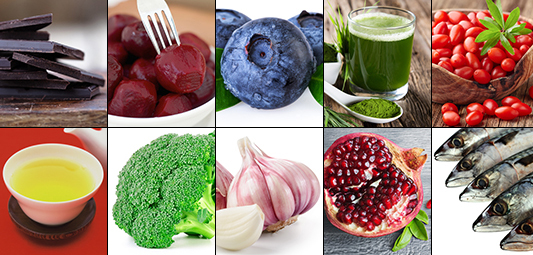
Where the evidence converges is at the level of patterns rather than ingredients. The USDA’s Nutrition Evidence Systematic Review examined 149 studies in adults and graded the evidence on dietary patterns and cardiovascular disease as strong. The patterns associated with lower recorded risk shared a description rather than a brand name: more vegetables, fruit, whole grains, legumes, nuts and seafood; less red and processed meat, refined grain and sugar-sweetened food and drink.
Mediterranean, DASH and healthy vegetarian patterns all fit that description. So does a great deal of ordinary home cooking. The overlap between them is larger than the differences their advocates emphasize.
Where that pattern evidence runs out is dementia. Observational work has linked the MIND pattern to slower cognitive decline for years. When it was tested directly, in a 2023 trial of 604 older adults over three years, cognitive scores improved by 0.205 standardized units in the MIND group and 0.170 in controls, a difference that did not reach significance. MRI measures were similar between groups. Three years may simply be too short for a disease that develops over decades, but the trial is a reminder of how often a strong observational signal thins out under randomization.
Cancer is similar. Diet is confidently associated with some cancers in cohort data, yet the randomized evidence for changing an adult’s diet and changing their cancer incidence remains weak.
How to read a diet study
A few questions separate a useful result from a press release.
| Question | What a good answer looks like |
|---|---|
| Was it randomized? | If not, the finding is an association, whatever the headline says. |
| What was measured? | Actual events beat risk factors; risk factors beat blood markers. |
| How big was the effect? | Absolute numbers, not “30 percent lower” without a baseline rate. |
| Who paid? | Commodity boards fund a large share of single-food research. |
| Was it replicated? | One cohort is a hypothesis. Several independent ones are evidence. |
The specific cases in this cluster are worth reading with those questions in hand: nuts and mortality, coffee and mortality, and the Okinawan longevity data, where the underlying records themselves have come under serious challenge.
Common questions
If observational studies can’t prove causation, why does anyone use them?
Because for most dietary questions there is no alternative. Randomizing 50,000 people to two diets for 20 years is not fundable or achievable. Cohorts remain useful for generating hypotheses, for ranking the plausibility of exposures, and for detecting rare harms. They are weakest exactly where they are quoted most confidently: precise effect sizes for single foods.
Does a supplement replace a dietary pattern?
The trial record on isolated nutrients is generally weaker than the observational record on whole foods that contain them. That gap has never been fully explained, and it is a reason to treat supplements as an addition to a diet rather than a substitute for one.
Why do dietary guidelines change so often?
Less often than they appear to. The core advice in the Dietary Guidelines for Americans (mostly plants, mostly unprocessed, limited added sugar and sodium) has been stable for decades. What changes is which single nutrient the news cycle has fixed on.
How much of long-term health is diet at all?
Nobody can put a defensible number on it. Smoking, physical activity, sleep, income, access to care and genetics all contribute, and they are correlated with diet, which is precisely why untangling the contribution of food is so difficult.
Where this leaves you
The strongest conclusion the research supports is unglamorous: a dietary pattern built mostly on plants, with limited refined and processed food, is associated with better long-term outcomes across many independent cohorts and performed well in the trials that tested it. No single food carries that result, and no supplement has been shown to reproduce it.
Getting more plants into a week is a practical problem rather than an informational one. If a concentrated greens powder makes that easier on the days when cooking does not happen, Greens Plus has been making them since 1989.
About the Author