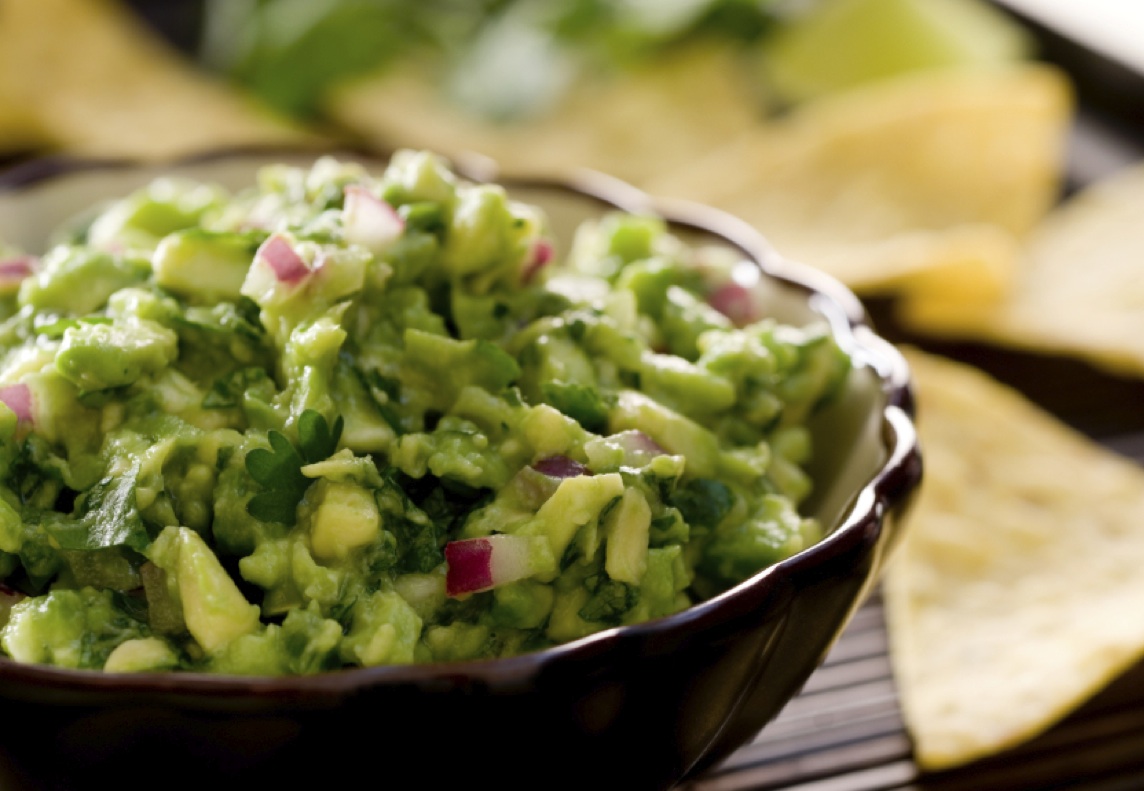
Half a Hass avocado supplies about 114 calories, 6.65 g of monounsaturated fat, 4.6 g of fiber and 345 mg of potassium. That much is settled. What was not settled, and what this page previously asserted anyway, is whether eating avocados makes anyone healthier.
The old headline here read “Avocado Eaters Live Healthier Lives.” The study underneath it could not support that sentence, and a later randomized trial of 1,008 people missed its primary endpoint. Both are covered below, along with the one avocado finding that is genuinely interesting and holds up.
The problem with the old headline
The study behind it was cross-sectional. It photographed diet and health at a single moment in a national survey and compared people who happened to eat avocados with people who did not. That design can establish that two things occur together. It cannot establish which came first, and it cannot rule out the possibility that a third factor produced both.
In this case the third factor is visible in the paper’s own results, which is the awkward part. The people eating avocados also had better overall diet quality. A headline saying avocado eaters live healthier lives asserts causation from a design chosen because causation could not be tested. The authors did not claim it. This page did.
What is actually in an avocado
Composition is the least contested part of the subject. Dreher and Davenport’s 2013 review in Critical Reviews in Food Science and Nutrition gives, for one half of a Hass avocado at about 68 g: 114 calories, 10.5 g total fat of which 6.65 g monounsaturated and 1.45 g saturated, 4.6 g dietary fiber, 345 mg potassium, 60.5 µg folate, 185 µg lutein and zeaxanthin, and 57 mg phytosterols. Per 100 g that works out to 167 calories, 15.4 g fat, 9.8 g monounsaturated fat and 6.8 g fiber.
Two of those numbers stand out. Nearly 5 g of fiber in half a fruit is unusual, and the potassium content is substantial in a food most people do not think of as a potassium source; NIH’s Office of Dietary Supplements sets out where potassium intakes generally sit. The fat is overwhelmingly monounsaturated, which is the composition that puts avocado alongside olive oil and nuts rather than alongside other fruit.
The cross-sectional evidence
Fulgoni and colleagues, in Nutrition Journal in 2013, analyzed National Health and Nutrition Examination Survey data from 2001 to 2008 covering 17,567 adults aged 19 and over. Of those, 347 people (about 2%) were avocado consumers, with a mean intake of 70.1 g a day, roughly half a fruit and about 114 calories.
Consumers had significantly lower body weight, BMI and waist circumference (P < 0.01) and higher HDL cholesterol (P < 0.01) than non-consumers. Their odds of meeting the criteria for metabolic syndrome were 50% lower (odds ratio 0.50, CI 0.32–0.72). Their diet quality on the Healthy Eating Index was significantly higher (P < 0.0001).
The authors wrote that the report came from cross-sectional epidemiological data and thus could not provide causal evidence. The study was supported by the Hass Avocado Board. Neither fact discredits it; both are needed to read it correctly.
What happened when it was randomized
The question was eventually tested properly. The Habitual Diet and Avocado Trial, published in the Journal of the American Heart Association in 2022, randomized 1,008 free-living adults with elevated waist circumference across four US clinical centers. The intervention group ate one large avocado a day for 26 weeks; the control group continued their habitual diet with no more than two avocados a month.
The primary outcome was visceral adipose tissue volume, and there was no significant difference between groups (P = 0.405). Body weight and waist circumference changed similarly in both arms. Among lipids, only LDL cholesterol reached nominal significance, and the difference was −2.465 mg/dL (P = 0.038), a change too small to matter on its own. Triglycerides, HDL cholesterol and VLDL cholesterol did not differ.
Two things did improve in the avocado group: fiber intake and Healthy Eating Index scores. That is a real result, and it is the shape of the honest claim: adding an avocado a day improved the quality of the surrounding diet without changing the body-composition endpoint it was designed to change.
The Hass Avocado Board sponsored the trial and supplied the avocados. A large, well-powered, industry-funded trial that came back null on its primary endpoint is the single most informative document in this literature, and it points in the opposite direction from the survey work that preceded it.
The carotenoid finding, which does hold up
The strongest avocado evidence is not about avocados as a health food. It is about what fat does to the absorption of pigments in other vegetables.
Kopec and colleagues, in the Journal of Nutrition in 2014, ran two randomized crossover trials with 12 healthy participants each, comparing meals with and without avocado supplying 23 g of lipid. With a high-beta-carotene tomato sauce, beta-carotene absorption rose 2.4-fold. With raw carrots, beta-carotene absorption rose 6.6-fold and alpha-carotene 4.8-fold. Conversion of those provitamin A carotenoids to vitamin A rose 4.6-fold and 12.6-fold respectively.
Dreher and Davenport’s review summarized the earlier salad and salsa work in the same direction, reporting that adding avocado increased carotenoid bioavailability by two to five times.
The limits are worth stating. Twelve people per study, single meals, and absorption measured in blood rather than any health outcome. What this supports is a mechanism and a habit, not a claim: fat-soluble pigments need fat present to be absorbed, and a fat-free salad wastes much of what is in the salad. Avocado is one convenient whole-food way to supply that fat. Olive oil, nuts and full-fat dressing do the same job.
Calories, and whether that matters
At 167 calories per 100 g, avocado has roughly the energy density of a starchy food rather than a vegetable. A large fruit is around 240 calories. It is easy to add several hundred calories to a salad without registering it, and that is a fair objection.
The trial evidence is reassuring on the narrow question. Adding one large avocado a day for 26 weeks did not change body weight relative to control in a group of more than a thousand adults. Whether that generalizes beyond 26 weeks, or to people who add avocado on top of an unchanged diet rather than in place of something, has not been tested. The general accounting is covered in calories and energy balance.
Water and land
The environmental objection is real, and more specific than the usual version of it. A 2024 study in Water measured the water footprint of agro-industrial avocado production in Ziracuaretiro, in Michoacán’s avocado belt, at 839 m³ per ton under rainfed conditions, 2,356 m³ per ton irrigated, and 1,597 m³ per ton on average, roughly 1,600 liters per kilogram of fruit.
Context matters in both directions. The same paper put corn at 1,222 m³ per ton, wheat at 1,827 and oranges at 560, and the global avocado average at 1,132. Avocado is not an extreme outlier per kilogram. What makes the number bite is where it is spent: the authors reported that avocado cultivation there could demand up to 124.3% of the municipality’s agricultural water concessions, and referenced illegal water extraction and containment ponds dismantled during the 2024 drought. Expansion across Latin America has been linked to deforestation and land-use change.
The honest framing is that avocado is a moderately thirsty crop grown in concentrated regions where local water balance, not global averages, is the binding constraint.
Common questions
Is half an avocado a day worth eating?
As food, yes. It is a good source of monounsaturated fat, fiber and potassium, and it makes fat-soluble pigments in the rest of the meal more absorbable. As an intervention expected to change body composition, the 2022 randomized trial found no effect on visceral fat over 26 weeks.
Do avocados help with belly fat?
That is precisely what the Habitual Diet and Avocado Trial set out to test, in 1,008 adults with elevated waist circumference, and visceral adipose tissue did not differ between groups. The claim does not survive its own best test.
Does avocado need to be eaten with vegetables to do anything?
The carotenoid absorption effect requires co-ingestion: the fat and the pigments have to be in the same meal. Eaten alone, an avocado is still a good source of fat, fiber and potassium; eaten with a salad or a tomato sauce, it also changes how much of that meal’s carotenoid content is absorbed.
Are avocados too high in calories?
They are energy-dense at about 240 calories for a large fruit, so portion matters more than with most produce. In the 26-week trial, one a day did not change body weight compared with control, which is the most direct evidence available on the question.
Where this leaves it
Avocado is a nutritionally good food with a specific, well-demonstrated ability to improve carotenoid absorption from the rest of a meal, and no demonstrated effect on visceral fat when tested directly. The survey finding that avocado eaters are leaner and healthier remains true and remains uninterpretable as advice, because avocado eating is a marker of a broader dietary pattern.
The pattern is the point rather than the fruit, which is the case made in the Mediterranean diet and in how many fruits and vegetables a day. The same logic about whole foods versus their reputations applies to nuts and long-term health.
Greens Plus makes powders, bars and capsules from concentrated plant ingredients. They are a different kind of food from a whole fruit, and they are not a substitute for one. The full ingredient list for each product is on its label and at greensplus.com.
About the Author