Federal guidance puts the daily target at about 2 cups of fruit and 2½ to 3 cups of vegetables for most adults. In 2019, 12.3% of US adults met the fruit target and 10.0% met the vegetable target. Those two numbers describe the whole problem.
The version of this page that stood here reported that people eating seven servings a day were “42% more likely to live longer.” That figure was wrong twice over, and the retraction is below. What follows covers where the benefit levels off, whether variety counts separately from quantity, how the forms compare, and what has actually raised intake in trials.
The targets, and how few people reach them
MyPlate sets vegetables at 3 cup-equivalents a day for men aged 19 to 50 and 2½ for both men over 50 and women aged 19 to 50, dropping to 2 for women over 50. Fruit is 2 cup-equivalents for most adults. A cup-equivalent is not always a cup: 2 cups of raw leafy greens count as one, and so does ½ cup of dried fruit.
The World Health Organization uses weight instead: at least 400 g a day for everyone over 10, which lands in roughly the same place.
The CDC’s 2019 analysis of Behavioral Risk Factor Surveillance System data, covering 294,566 respondents, found 12.3% of adults meeting the fruit recommendation and 10.0% meeting the vegetable one. Men did worse than women on both, and vegetable intake tracked income closely: 6.8% of adults in the lowest income-to-poverty group met the target, against 12.2% in the highest.
What the dose-response evidence found
The largest synthesis is Aune and colleagues’ 2017 meta-analysis in the International Journal of Epidemiology, which pooled 95 prospective cohort studies with up to 2,123,415 participants. Per 200 g a day of fruit and vegetables, the summary relative risk was 0.90 (95% CI 0.87–0.93) for all-cause mortality, 0.92 for cardiovascular disease, 0.84 for stroke and 0.97 for total cancer. Reductions in risk were observed up to 800 g a day for every outcome except cancer, where the curve flattened around 600 g.
The more recent pooled work points lower. Wang and colleagues, writing in Circulation in 2021, followed 66,719 women in the Nurses’ Health Study for 30 years and 42,016 men in the Health Professionals Follow-up Study for 28 years, recording 33,898 deaths, then pooled those results with 24 further cohorts for a total above 1.8 million participants. Five servings a day was associated with a hazard ratio of 0.87 (0.85–0.90) for total mortality compared with two servings. Above five servings, higher intake was not associated with any further reduction.
Two details there matter more than the headline. The lowest risk sat at roughly two servings of fruit and three of vegetables rather than an even split, and intakes of fruit juices, potatoes and other starchy vegetables were not associated with mortality at all.
Where the evidence is weak
All of it is observational. People who eat more produce also smoke less, move more and earn more, and no adjustment removes that entirely. Aune’s authors were explicit that their estimate of 5.6 million premature deaths worldwide attributable to intake below 500 g a day assumed the associations were causal, which is the one thing the design cannot establish. Intake is also measured by questionnaire, which people complete inaccurately and in a flattering direction.
The old version of this page rested on Oyebode and colleagues’ 2014 analysis of Health Survey for England data: 65,226 adults aged 35 and over, a median 7.7 years of follow-up, 4,399 deaths. The adjusted hazard ratio for 7 or more portions a day against fewer than 1 was 0.67 (0.58–0.78). That is a 33% lower hazard of dying during the follow-up window, not 42%, and not “more likely to live longer”; the study counted deaths over 7.7 years, not lifespan. The authors wrote that they had found a strong association but not necessarily a causal relationship.
One result in that same paper cuts against the tidy story. Frozen and canned fruit carried a hazard ratio of 1.17 per portion (1.07–1.28): higher mortality, not lower. Syrup packing and who buys syrup-packed fruit are the plausible explanations, rather than anything about freezing.
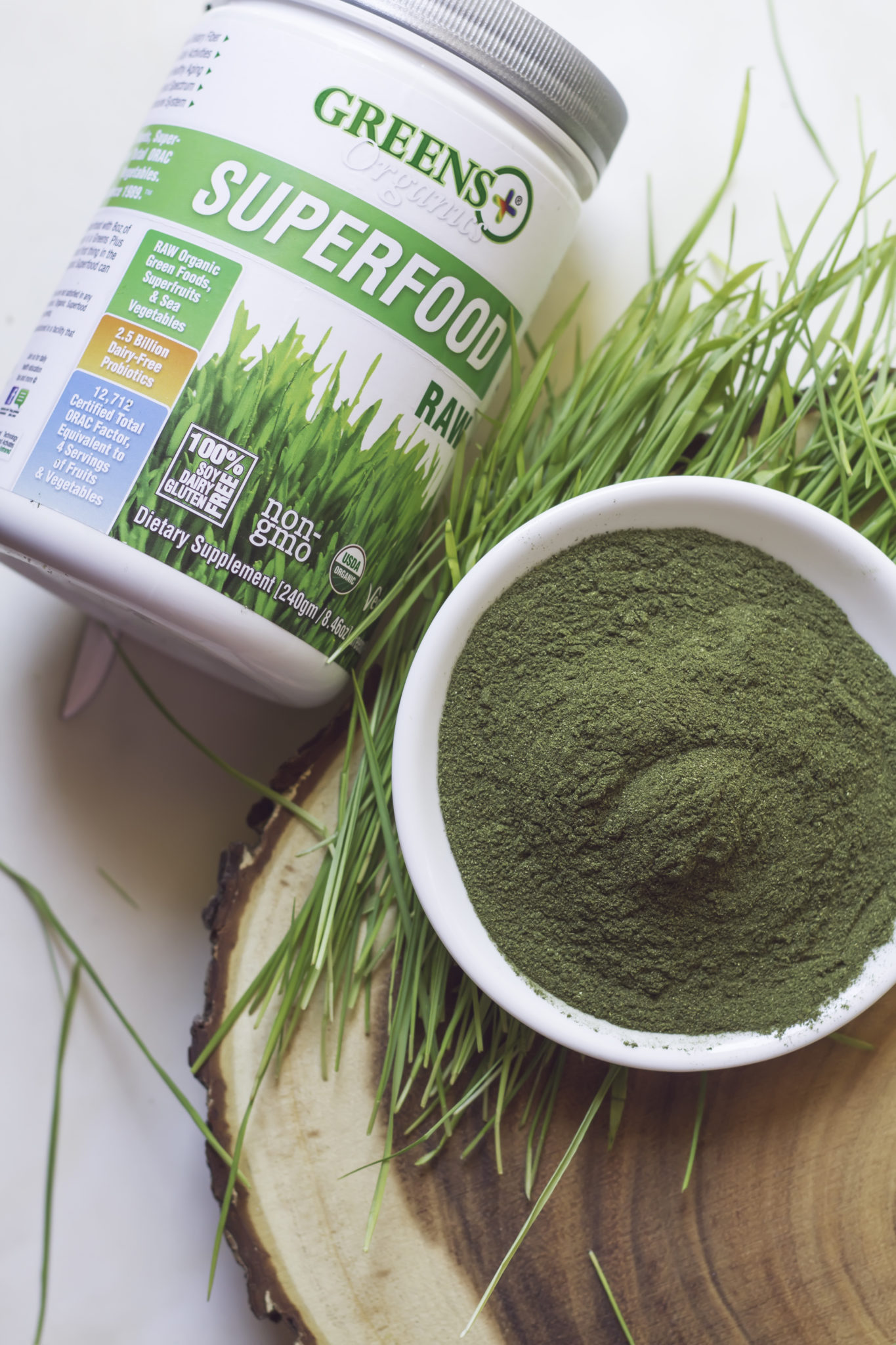
This page also once said a scoop of Greens Plus powder supplied the antioxidant equivalent of 4 to 35 servings of fruit and vegetables. That figure came from ORAC scores, and USDA withdrew its own ORAC database in 2012 on the grounds that the values had no demonstrated relevance to human health. No scoop of any powder is equivalent to servings of produce. The claim is retracted.
Whether variety counts on its own
Probably, but the evidence is thin. A 2023 systematic review and meta-analysis in Nutrients pooled 5 cross-sectional studies (45,761 participants) and 7 prospective cohorts (253,422 participants). Greater variety was associated with an 11% lower all-cause mortality risk (RR 0.89, 0.82–0.97), but no significant associations appeared for cardiovascular outcomes, blood lipids, blood pressure or glucose control. The authors graded the certainty of the evidence as low or very low throughout.
There is an indirect argument as well. Aune’s analysis found the associations concentrated in particular groups: apples and pears, citrus, green leafy vegetables, cruciferous vegetables and salads for cardiovascular outcomes, and green-yellow and cruciferous vegetables for cancer. A narrow range risks missing whichever of those is doing the work. Variety is a sensible heuristic rather than a validated target, and it is hard to separate from quantity anyway.
Fresh, frozen, canned and dried
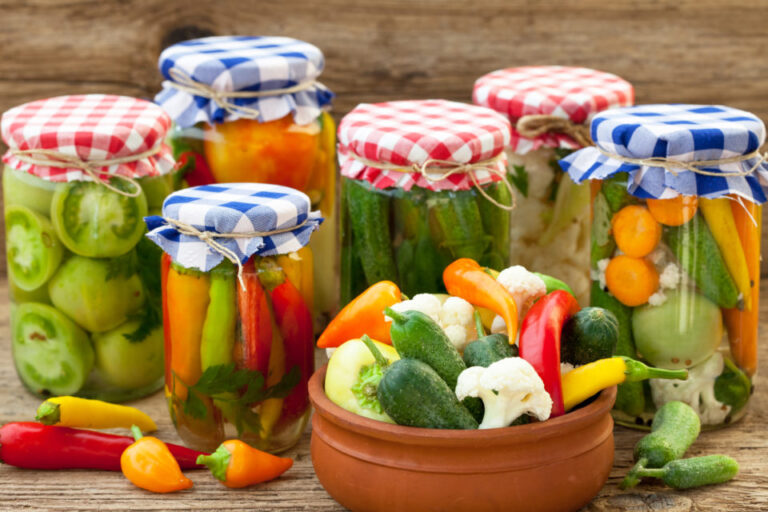
All four count: USDA counts vegetables “raw or cooked; fresh, frozen, canned, or dried/dehydrated” alike toward the cup-equivalent target. On nutrients, Li and colleagues, publishing in the Journal of Food Composition and Analysis in 2017, compared fresh, frozen and fresh-stored produce, the last being fresh produce held five days in a refrigerator. Across eight fruits and vegetables they found no significant difference in vitamin C, beta-carotene or folate in most comparisons, and where differences appeared, frozen generally retained more.
The variable worth watching is what was added, not how it was processed. Canned vegetables carry sodium unless the label says no salt added; canned fruit carries sugar unless it is packed in juice or water. Draining and rinsing removes much of the sodium. Dried fruit is concentrated, which is why ½ cup counts as a full cup-equivalent.
Juice is the awkward case: one cup of 100% juice counts as a cup-equivalent under USDA rules, while the 2021 pooled analysis found no association between juice intake and mortality. The trade-offs are set out in the piece on juicing versus blending, and keeping produce alive long enough to eat it is covered in storing fruit and vegetables.
Cost and access, not motivation
USDA’s Economic Research Service priced every form of every common fruit and vegetable using 2022 retail scanner data and concluded that meeting both recommendations was possible for about $2.50 to $3.00 a day. The cheapest options were fresh watermelon at 24 cents per cup-equivalent and baked white potatoes at 27 cents. The most expensive were canned cherries at $3.56 and frozen asparagus at $2.62.
The same dataset undercuts a common assumption. Neither fresh nor processed is reliably cheaper. Frozen spinach at $1.10 and canned spinach at 90 cents both beat fresh at $1.77 per cup-equivalent, while fresh carrots at 38 cents beat both.
Three dollars a day is roughly $1,100 a year for one adult and several times that for a household. Set beside a CDC income gradient in which the lowest-income group met the vegetable target at half the rate of the highest, “eat more vegetables” looks less like a motivation problem than a budgeting one. Time, transport, storage space and the risk of throwing away spoiled food sit on the same side of that ledger.
What actually moves intake
An umbrella review published in 2020 in the International Journal of Behavioral Nutrition and Physical Activity gathered 19 systematic reviews covering 32 intervention strategies. The strategies with the clearest effects changed what was available and what it cost. School programs providing free or reduced-price produce raised intake by about 0.28 servings; a 10% price subsidy was associated with a 14% increase in consumption, and a 10% price rise with a 5.3% to 7.2% decrease.
Education fared worse. The same review described nutrition-education-focused strategies as more equivocal, and parent nutrition education in home settings as largely ineffective. Telling people that vegetables are good for them is the intervention tried most often and working least well.
The same pattern shows at national scale. USDA’s Gus Schumacher Nutrition Incentive Program subsidizes produce for low-income shoppers and issues produce prescriptions through clinics. Reported intakes among nutrition-incentive participants ran to 2.78 cup-equivalents a day and among produce-prescription participants to 2.58, against a US adult average of 2.53, in communities with markedly lower incomes than average.
In a kitchen, availability and convenience beat intention. Produce that is already washed, cut or frozen tends to get eaten. Produce that requires a decision at six in the evening often does not.
Common questions
Is five a day enough, or should I aim for ten?
The 2021 pooled analysis found the lowest mortality at about five servings a day, with no further reduction above that. The 2017 meta-analysis found risk still falling out to 800 g a day, closer to ten. The disagreement is an argument about the top of the range, and almost nobody in the United States is near either figure.
Do potatoes count?
They count toward the USDA cup-equivalent target as a starchy vegetable. They did not behave like other vegetables in the cohort data, where potatoes and other starchy vegetables were not associated with mortality. Treating them as their own category is reasonable.
Does 100% juice count?
One cup counts as one cup-equivalent under USDA rules. The epidemiology is less encouraging, since the 2021 pooled analysis found no association between juice intake and mortality. Juice also removes most of the fiber and nearly all of the chewing.
Where this leaves it
Two servings of fruit and three of vegetables a day is where the measured association bottoms out, and that is a long way above where most people are. Moving from one serving to three is a larger change than moving from five to eight, and far easier.
The interventions with the best record are dull: buy produce in a form that survives the week, keep it visible, and take the decision out of the evening. Children are a separate problem with a separate evidence base, covered in getting children to eat vegetables.
Greens Plus makes powders, bars and capsules from concentrated plant ingredients. A scoop is a few grams of dried plant material. It is not equivalent to cup-equivalents of produce and carries neither the volume nor the fiber that whole fruit and vegetables do. What is in each product is listed on its label and at greensplus.com.
About the Author