The strategy with the best evidence behind it is unglamorous: offer a small amount of the same vegetable, repeatedly, without comment, and let the child decide whether to eat it. The American Academy of Pediatrics puts the number at as many as ten or more tastings before a toddler accepts a food. Most families stop at three or four.
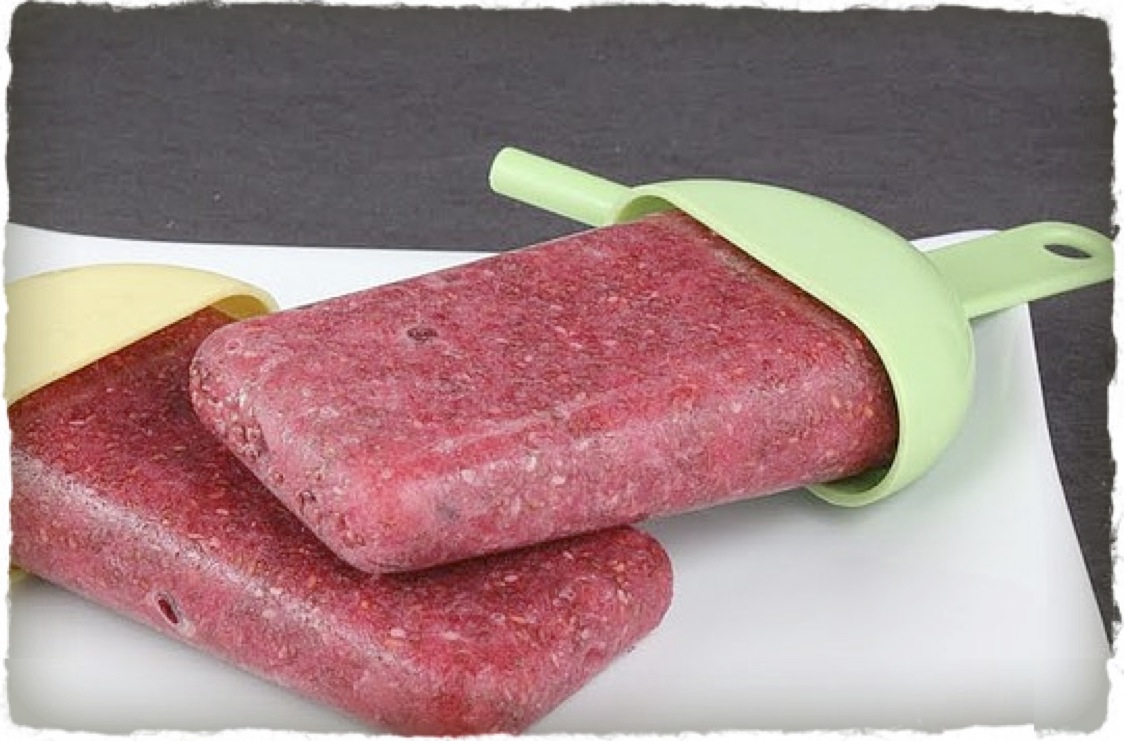
The version of this page that stood here promised a “foolproof trick” and then gave a recipe for fruit popsicles. Fruit was never the hard part, a popsicle does nothing for vegetable acceptance, and there are no foolproof tricks. What follows is what the feeding research supports and where it runs out.
How many tries it takes
AAP guidance states that it can take “as many as 10 or more times tasting a food before a toddler’s taste buds accept it.” The unit is a taste, not a portion. A single floret on the plate that goes uneaten still counts as an exposure.
The systematic evidence is consistent with that, and modest about it. A 2020 Cochrane review of interventions to increase fruit and vegetable consumption in children aged five and under identified 80 randomized trials with 12,965 participants. Multicomponent interventions produced a small effect at moderate-certainty evidence. Child-feeding practice interventions, the category that includes repeated exposure, showed small positive effects on vegetable intake at low certainty. Parent and child nutrition education alone remained uncertain.
A 2020 umbrella review in the International Journal of Behavioral Nutrition and Physical Activity put numbers on the same categories: childcare feeding interventions returned a standardized mean difference of 0.63 (95% CI 0.23–1.03), and parent child-feeding practices 0.46 (0.13–0.79). Those are real effects. They are also small ones.
The practical shape of it: serve the vegetable at a normal meal, in a small amount, alongside food the child will eat. Say nothing about it. Repeat next week. The work is in the repetition, not in the presentation.
The target is also smaller than adults tend to assume. The World Health Organization sets 250 g of fruit and vegetables a day for children aged 2 to 5 and 350 g for children aged 6 to 9, against 400 g for everyone over 10.
Why pressure and rewards backfire
Pressure has been tested directly. Galloway and colleagues, in 2006, ran a repeated-measures experiment with preschoolers in which children in the experimental condition were asked to finish their food. Children consumed significantly more when they were not pressured, and made overwhelmingly fewer negative comments about the food. Children who were routinely pressured at home were less affected by pressure in the lab, which is its own finding.
The mechanism is not mysterious. Pressure attaches an unpleasant experience to a specific food, and the child learns the association. AAP puts it plainly: pressuring children to eat, or punishing them when they do not, “can make them actively dislike foods they may otherwise like.”
Rewards are the subtler version of the same error. Offering dessert in exchange for broccoli tells a child two things at once: that dessert is valuable enough to be worth paying for, and that broccoli is a cost. AAP advises against bribing with treats for exactly that reason. The trial evidence on incentives is genuinely mixed: short-term tasting rewards have produced short-term increases in some studies, but no review has identified rewards as a leading strategy, and the framing risk is real.
Modeling, and who decides what
Children eat what they see eaten. The parent child-feeding practices category in the umbrella review, which covers modeling alongside repeated exposure and responsive feeding, carried one of the larger effect estimates in that review at a standardized mean difference of 0.46. Eating the same vegetable at the same table, visibly and without commentary, is part of that package.
The organizing principle underneath is a division of responsibility. AAP describes it as a parent’s responsibility to provide food and decide when meals happen, and the child’s decision whether and how much to eat. That division does two useful things. It removes the adult from the part of the transaction they cannot control anyway, and it removes the incentive to negotiate.
In practice this means putting the vegetable on the table rather than on the child’s plate as a condition, not commenting on how much was eaten, and not producing an alternative meal when dinner is refused. Short-order cooking teaches a reliable lesson, which is that refusal produces a better option.
Neophobia, texture and the normal window
Reluctance to try new food is a developmental stage, not a personality flaw. AAP describes picky eating as “often the norm for toddlers,” appearing after infancy when growth and appetite naturally slow. It generally emerges in the second year and eases through the preschool and early school years, which means most of what parents are fighting resolves on a timetable of its own.
Many refusals are about texture rather than taste. Mixed textures, sauces, wet foods touching dry ones and unfamiliar mouthfeel account for a large share of rejections, and a child who refuses a stew may accept the same vegetable roasted and served separately. Serving components apart, keeping preparation consistent, and offering a familiar food alongside the new one all reduce the number of things a child has to accept at once.
None of that is a reason to stop offering. It is a reason to change the format rather than the frequency.
Hidden vegetables, honestly
Blending vegetables into food a child already eats works, for one specific purpose. Spill and colleagues, in 2011, ran a crossover study in which 40 children aged 3 to 5 were served all meals and snacks one day a week for three weeks, with puréed vegetables incorporated into entrées to reduce energy density. Daily vegetable intake rose by 52 g (50%) in one condition and 73 g (73%) in the other, while daily energy intake fell by 142 kcal (12%).
The detail that matters for the acceptance question is buried in the same paper: children rated their liking of the manipulated foods similarly across all conditions. They did not like the vegetables more. They did not know the vegetables were there. Nothing about their willingness to eat a visible carrot changed.
So hidden vegetables feed a child vegetables. They do not build acceptance, because acceptance is built by tasting a food you know you are tasting. The two are separate jobs and can be done at the same meal: purée in the sauce, and a few visible pieces on the side that nobody comments on.
What the trial evidence is actually worth
Less than the confident tone of most parenting advice suggests. The Cochrane reviewers concluded that despite a large number of eligible trials, confidence in the effect estimates remained limited except for multicomponent approaches, and wrote that long-term follow-up of at least 12 months is required and that future research should adopt more rigorous methods.
The weaknesses are consistent. Most trials are short. Intake is frequently measured by parent report, which is subject to the same flattery as adult self-report. Few studies follow children long enough to know whether an increase survives the intervention. And the effect sizes, where they exist, are fractions of a serving rather than a change in what a child will eat.
The honest summary is that repeated exposure, modeling and a clear division of responsibility are the best-supported approaches available, that their measured effects are small, and that time does a substantial share of the work regardless.
When picky eating is something else
Ordinary picky eating narrows and then widens again. Avoidant restrictive food intake disorder does not. The National Institute of Mental Health describes ARFID as severe restriction of the types or amount of food eaten, driven by anxiety about consequences such as choking or by aversion to a food’s sensory characteristics, with a range of preferred foods that becomes progressively more limited.
The distinguishing features are trajectory and consequence rather than the length of the list. NIMH lists dramatic weight loss, lack of appetite, gastrointestinal complaints, and functional impairment affecting school, work and relationships. Over time it can produce unhealthy weight loss, malnutrition and impaired growth.
The threshold for asking is low. NIMH advises talking to a primary care provider about concerns over eating behavior, and AAP advises the same about any worry over a child’s diet. Faltering growth, a shrinking food list, distress at mealtimes that is escalating rather than easing, or refusal of whole food groups are all reasons to raise it rather than wait it out.
Common questions
How many times should I offer a food my child rejects?
AAP suggests as many as ten or more tastings before a toddler accepts a new food. The unit is small: a taste, offered at a normal meal, with no comment on whether it is eaten. Most families give up well before ten.
Should I make something else if dinner is refused?
Under the division of responsibility AAP describes, the parent decides what is served and when, and the child decides whether to eat. Producing an alternative moves the second decision back to the adult and teaches that refusal is worth trying. Serving one component the child reliably eats alongside the rest solves the same problem without the negotiation.
Do puréed vegetables in pasta sauce count?
They count toward intake. The 2011 crossover study found daily vegetable intake rose by 50% to 73% when purées were blended into entrées. They do not count toward acceptance, since children in that study rated their liking of the foods the same as before. Both are worth doing, for different reasons.
Is my child’s picky eating a problem?
Usually not, and usually temporary. The signals worth acting on are weight loss, faltering growth, a preferred-food list that keeps shrinking, and mealtime distress that is getting worse rather than better. A pediatrician is the right place to take those.
Where this leaves it
Offer the same vegetable often and in small amounts, eat it yourself, decide what and when while leaving whether and how much to the child, and stop attaching consequences to it in either direction. Most of the rest is patience, and most children’s ranges widen on their own.
Keeping vegetables in the house in a form that survives the week helps more than any technique, and that is covered in storing fruit and vegetables. The adult version of the same intake problem is covered in how many fruits and vegetables a day, and some formats children tend to accept are in plant-forward recipes.
Greens Plus makes powders, bars and capsules from concentrated plant ingredients. They are formulated for adults, they are not a substitute for a child eating vegetables, and any supplement for a child is a conversation for a pediatrician first. Product and ingredient details are at greensplus.com.
About the Author