Most produce spoils faster than it needs to for three reasons: it is stored at the wrong temperature, it is stored next to something releasing ethylene, or it was washed before it went into the refrigerator. Fixing those three things does more for a produce drawer than any gadget sold to fix them.
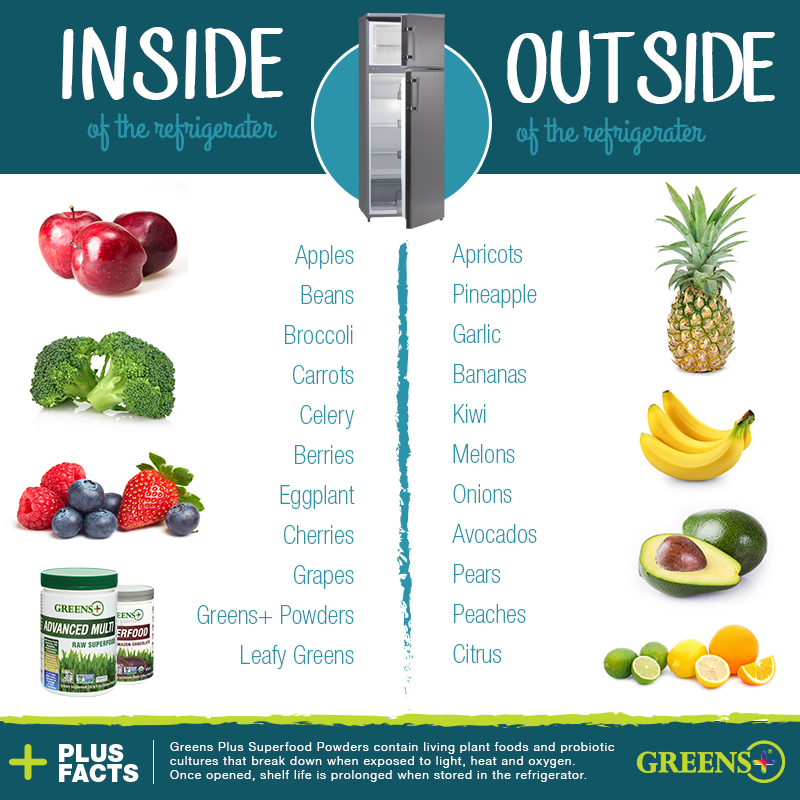
The list that stood here put apples, berries and grapes in the refrigerator and pineapple, melons and avocados on the counter, which is roughly right but explains nothing and gets tomatoes wrong. The reference below gives the reasons, because the reasons let you work out the cases the list does not cover.
Ethylene is the main thing going on
Ethylene is a gaseous plant hormone that triggers ripening. Some produce releases a lot of it; some produce responds badly to being near it. Storing a heavy producer beside a sensitive item is the single most common way to lose a bag of greens early.
Heavy producers include apples, apricots, avocados, bananas, cantaloupe, honeydew, kiwifruit, mangoes, nectarines, papayas, peaches, pears, plums and ripening tomatoes. Sensitive items include asparagus, broccoli, Brussels sprouts, cabbage, carrots, cauliflower, cucumbers, eggplant, leafy greens, lettuce, herbs, peas, peppers, summer squash and watermelon. In sensitive commodities, ethylene exposure accelerates ripening and senescence, yellows green tissue, and increases susceptibility to decay.
The practical rule is separation, not elimination. Keep the producers in one drawer or on the counter and the sensitive items in another. UC Davis’s compatibility chart does the same thing at commercial scale, splitting cold storage into a group for ethylene-producing fruit and a group for the very sensitive green vegetables, which need ethylene held below 1 part per million.
Chilling injury: why the refrigerator is not always right
Cold slows spoilage, but produce from warm climates was never adapted to it. Below a species-specific threshold, cell membranes are damaged and the fruit deteriorates in ways that look nothing like ordinary rot: pitting, blotchy or failed ripening, water-soaked patches, brown seeds, premature softening and increased decay once it warms up again.
Tomatoes are the case worth knowing in detail. UC Davis lists tomatoes as chilling-sensitive below 10°C (50°F) beyond about two weeks, or at 5°C (41°F) beyond six to eight days, both well inside the range of a home refrigerator. A study published in PNAS in 2016 held tomatoes at 4°C (39°F) for seven days and found reduced production of the volatile compounds that make a tomato taste like one; a consumer panel of 76 people rated the chilled fruit as less flavorful, and three days back at room temperature did not restore it.
Potatoes are the other case, for a different reason. Cold storage triggers cold sweetening, in which starch converts to reducing sugars. FDA’s acrylamide guidance notes that those reducing sugars are the main driver of acrylamide formation when potatoes are fried or roasted, and that industry recommendations keep storage above about 43°F for this reason. A cool, dark cupboard is the right place, away from onions, which release moisture that encourages sprouting.
Crisper drawers and humidity
The two drawers are not decorative. The sliding vent controls how much moist air escapes, and the right setting depends on whether an item’s failure mode is wilting or rotting.
High humidity, vent closed, is for anything that goes limp: leafy greens, herbs, asparagus, broccoli, carrots, celery, cucumbers, peppers, green beans. Low humidity, vent open, is for anything that molds or over-ripens, which mostly means ethylene-producing fruit (apples, pears, stone fruit, grapes, berries) because the open vent lets both moisture and ethylene out. Iowa State University Extension sets out the same split.
Keep the refrigerator itself at 40°F or below. That figure is a food-safety line rather than a quality one, and it applies to the whole compartment.
Washing, and the food-safety lines that matter
Wash before eating, not before storing. Water left on produce accelerates decay: University of Maine Cooperative Extension notes that wet green beans develop black spots and break down quickly, and berries stored damp mold within a day or two.
FDA’s guidance is plain running water and nothing else. Soap, detergent and household bleach can be absorbed by produce and are not intended for consumption, and commercial produce washes have not been shown to work better than water. Firm produce (melons, cucumbers, potatoes) should be scrubbed with a clean brush. Delicate items go in a colander under a spray rather than a soak. Drying with a clean towel afterward removes more bacteria still.
Bagged greens labeled “pre-washed” or “ready-to-eat” do not need rewashing, and rewashing them in a home sink introduces more contamination risk than it removes. Wash produce even when you plan to peel it, since the knife carries whatever is on the skin into the flesh.
Cut melon deserves specific mention. A whole cantaloupe is a low-acid, high-moisture food with a netted rind that holds soil organisms; once cut, the flesh supports bacterial growth well. Cut melon belongs in the refrigerator promptly, and the rind should be scrubbed before the knife goes through it. Anything sold pre-cut or pre-packaged needs refrigeration from the moment it is bought, bagged salad included. Refrigeration slows bacterial growth; it does not stop it.
The storage reference
| Item | Where | Notes |
|---|---|---|
| Leafy greens, herbs, lettuce | Refrigerator, high-humidity drawer | Very ethylene-sensitive; keep away from apples and bananas |
| Broccoli, cauliflower, cabbage, Brussels sprouts | Refrigerator, high-humidity drawer | Ethylene-sensitive; yellowing is the first sign |
| Carrots, celery, asparagus, green beans | Refrigerator, high-humidity drawer | Wilt is the failure mode; keep moisture in |
| Berries, grapes, cherries | Refrigerator, low-humidity drawer | Do not wash until eating; discard moldy fruit immediately |
| Apples, pears, stone fruit (ripe) | Refrigerator, low-humidity drawer | Heavy ethylene producers; ripen on the counter first |
| Cucumbers, eggplant, peppers, summer squash | Refrigerator, high-humidity drawer, or a cool room | Mildly chilling-sensitive; use within about a week |
| Tomatoes | Counter, out of direct sun | Refrigeration below 50°F degrades flavor irreversibly |
| Bananas, mangoes, papayas, pineapple, avocados | Counter until ripe | Chilling-sensitive when unripe; refrigerate only once ripe, briefly |
| Melons (whole) | Counter until ripe, then refrigerate | Scrub the rind before cutting |
| Citrus | Counter for a week, refrigerator for longer | Tolerates cold better than other tropical fruit |
| Potatoes, sweet potatoes, winter squash | Cool, dark cupboard | Not the refrigerator; keep potatoes away from onions |
| Onions, garlic, shallots | Cool, dark, ventilated | Not in a sealed bag; not beside potatoes |
| Any cut produce | Refrigerator at 40°F or below | Including cut melon and cut leafy greens; no exceptions |
What storage does to nutrients
This is the part that surprises people. Li and colleagues, publishing in the Journal of Food Composition and Analysis in 2017, compared fresh, frozen and “fresh-stored” produce, the last category being fresh produce held five days in a refrigerator, which is how people actually eat it. Across broccoli, cauliflower, corn, green beans, green peas, spinach, blueberries and strawberries, they measured vitamin C, beta-carotene and folate.
In most comparisons there was no significant difference between the three categories. Where differences did appear, frozen produce generally retained more than refrigerated fresh produce. The authors concluded the results did not support the common consumer belief that fresh food is nutritionally superior to frozen. A companion analysis from UC Davis in the Journal of Agricultural and Food Chemistry in 2015 reached a similar conclusion.
The mechanism is straightforward. Produce for freezing is picked at maturity and blanched and frozen within hours, which arrests most enzymatic degradation. Fresh produce is picked earlier, shipped, displayed and then stored again at home, and vitamin C in particular declines throughout. Frozen is not a compromise; for several nutrients it is the better-preserved option, and it is usually cheaper.
What this does not fix
Storage protects what was harvested. It does not improve it. A tomato picked green and gassed to color will not develop flavor on a counter, and no drawer setting compensates for produce that was mediocre at purchase.
The published storage-life figures come from commercial trials at controlled temperature and humidity, and a home refrigerator that swings several degrees each time the door opens will not match them. Treat the guidance above as direction rather than as precise timing.
Ethylene-absorbing gadgets sold for produce drawers are a weaker intervention than simply separating the fruit from the greens, and the home evidence for them is thin. Separation is free.
Common questions
Should tomatoes ever go in the refrigerator?
Only when they are fully ripe and about to be lost otherwise, and then only briefly. The 2016 PNAS study found that seven days at 4°C reduced flavor volatiles and that a consumer panel detected the loss, which three days of rewarming did not reverse. A day or two of refrigeration on a ripe tomato is a smaller cost than throwing it away.
Why do my greens wilt in a few days?
Usually ethylene, humidity, or both. Greens are among the most ethylene-sensitive things in a refrigerator, so apples, pears and bananas sharing the space will shorten their life considerably. They also need the high-humidity drawer with the vent closed, and they need to go in dry.
Is frozen produce as good as fresh?
For vitamin content, the 2017 comparison found no significant difference in most cases and an advantage to frozen where differences appeared. Texture differs, so frozen suits cooking and blending better than salads. For anyone whose fresh produce regularly goes bad before it is eaten, frozen is straightforwardly the better buy.
Does washing produce remove pesticide residues?
Rinsing under running water removes part of what sits on the surface, and scrubbing firm produce removes more. It does not remove residues taken up into the plant. The wider question of what those residues amount to is covered in the piece on which foods are worth buying organic.
Where this leaves it
Three habits carry most of the benefit: separate ethylene producers from greens, keep chilling-sensitive fruit off the cold shelf, and wash immediately before eating rather than before storing. Everything else is refinement.
Produce that gets eaten beats produce that gets stored perfectly, which is also the argument for keeping frozen fruit and vegetables on hand for blended drinks and for closing the gap described in the piece on fruit and vegetable intake. Greens Plus powders are shelf-stable and belong in a cool, dry cupboard rather than the refrigerator; storage guidance for each product is on its label and at greensplus.com.
About the Author