
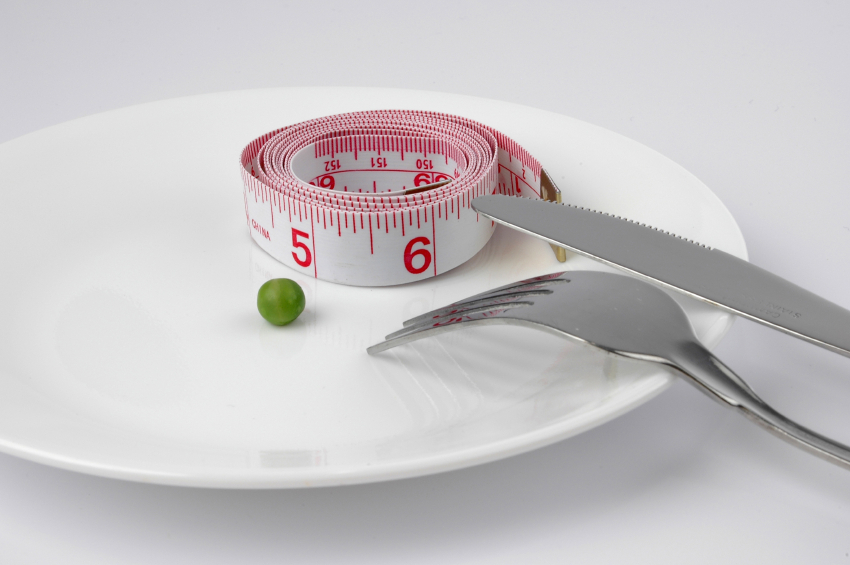
Diets fail at roughly the same rate whatever is written on the front of the book. That is the finding, and it has been replicated for two decades: when two named diets are compared head to head under equal support, they produce nearly identical average results, and both curves bend back toward baseline after the first year. The failure is structural. It sits in how weight-loss programs are built and how long they last, not in the macronutrient split.
Two corrections first. The article that stood here claimed low-calorie diets “simply do not work”; they do produce weight loss, and the problem is what happens afterward. It also claimed a pound of muscle burns 6 to 50 calories a day at rest.
What head-to-head trials actually found
The most careful comparison is DIETFITS, published in JAMA in 2018. Gardner and colleagues randomized 609 adults to a healthy low-fat or a healthy low-carbohydrate diet for 12 months, with substantial dietitian support in both arms. At 12 months the low-fat group had lost 5.3 kg and the low-carbohydrate group 6.0 kg, a between-group difference of 0.7 kg, with a confidence interval spanning zero. Both groups cut reported intake by about 20 percent.
DIETFITS was designed to test something more interesting than that. It pre-specified whether a three-SNP genotype pattern or baseline insulin secretion would identify who did better on which diet. Neither did: the diet-genotype interaction and the diet-insulin interaction were both non-significant. The premise behind a great deal of personalized-diet marketing did not survive its own test.
Gardner had run the earlier comparison too. The A TO Z trial in JAMA in 2007 assigned 311 overweight premenopausal women to Atkins, Zone, LEARN or Ornish for 12 months. Atkins produced the largest mean loss at 4.7 kg, against 1.6 kg for Zone, 2.6 kg for LEARN and 2.2 kg for Ornish. Only the Atkins-Zone difference reached significance, and the Atkins advantage that was visible at two to six months had narrowed by 12 as participants regained.
Both trials are worth reading fairly. Atkins, Ornish, Zone and LEARN are all coherent, internally consistent ways of eating that helped some of the people assigned to them. None of them beat the others by enough to matter at a year.
The regain curve is the real finding
Look at what happens after the program stops and the pattern is unmistakable across diets. A 2023 evidence synthesis in Diabetes, Obesity and Metabolism pooled 155 randomized trials and over 150,000 participants, some followed as long as 23 years. Behavioral weight management programs produced 2.8 kg more loss than control at the end of the program. Afterward, intervention groups regained 0.12 to 0.32 kg per year faster than controls, and a measurable difference between groups still existed at five years.
That is the honest shape of it: real loss, gradual convergence, a residual difference that persists longer than the pessimistic version of this story allows. A companion meta-analysis in Circulation: Cardiovascular Quality and Outcomes covering 124 trials found that improvements in blood pressure, HbA1c and cholesterol ratio also shrank as weight returned, but were still detectable five years out.
Regain is not a moral event. It is what a system does when the pressure that displaced it is removed.
Look AHEAD and the Diabetes Prevention Program
Two trials went far beyond the usual 12 months, and between them they define what intensive lifestyle support can and cannot do.
Look AHEAD, reported in the New England Journal of Medicine in 2013, randomized 5,145 adults with type 2 diabetes to intensive lifestyle intervention or diabetes support and education. At one year the intervention group had lost 8.6 percent of body weight against 0.7 percent in the control group. Weight loss was largely maintained at a reduced level for years, but the trial was stopped at a median 9.6 years for futility on its primary endpoint: rates of cardiovascular death, heart attack, stroke and hospitalization for angina did not differ significantly between the groups.
The Diabetes Prevention Program ran the same idea in people at high risk of diabetes. The 2002 report in the New England Journal of Medicine followed 3,234 participants for an average 2.8 years and found 58 percent lower incidence of type 2 diabetes in the lifestyle arm than placebo, and 31 percent lower with metformin. At the 15-year follow-up published in Lancet Diabetes and Endocrinology in 2015, the lifestyle advantage had narrowed to 27 percent and metformin to 18 percent, and the weight difference between arms had largely closed by about four years.
Read together: intensive support works while it is running, its effects attenuate, and weight loss is not interchangeable with clinical benefit. That last point is uncomfortable and is rarely said in diet marketing.
Why the structure fails rather than the person
Three things fail at once, and none of them is character.
The first is that the program ends. Almost every trial above delivered its result while participants had scheduled contact with a professional, and the regain curve tracks the withdrawal of that contact more closely than it tracks any dietary variable.
The second is that the target moves. A smaller body costs less energy to run, and energy expenditure falls somewhat further than the lost tissue predicts. The mechanics of that are covered in more detail in the piece on energy balance and calorie counting.
The third is that the food environment does not change. A diet is a temporary rule set imposed on a permanent environment. When the rule set expires, the environment is still there.
Muscle mass is not the missing variable either. The tissue values used in resting energy expenditure models, evaluated by Wang and colleagues in Obesity Research in 2001, put skeletal muscle at about 13 kcal per kg per day, roughly 6 calories per pound at rest, not 50. Several pounds of added muscle is worth a few dozen calories a day. That is worth having for other reasons; it is not a weight-management strategy.
What distinguishes people who maintain
Some people do keep weight off. The best description of them comes from the National Weight Control Registry, summarized by Wing and Phelan in the American Journal of Clinical Nutrition in 2005. Registry members had lost an average of 33 kg and kept it off for a mean 5.7 years.
Their reported behaviors are consistent and unglamorous. High physical activity: around 2,545 kcal a week for women and 3,293 for men, roughly an hour a day of brisk walking. Frequent self-weighing, with 44 percent weighing daily. Regular breakfast, reported by 78 percent. A diet they described as consistent across weekdays and weekends rather than cycled.
The single most encouraging finding in that literature is about time. Wing and Phelan reported that people who had held a loss for two years, and more so for five, were markedly less likely to regain from that point. Maintenance appears to get easier, not harder, once it has lasted.
Where this evidence is weak
The registry is not a randomized trial and cannot show causation. It is a self-selected, mostly female, mostly college-educated group of successful maintainers describing their own habits in retrospect. It tells you what maintainers look like, not what would happen if someone else copied them.
The trial evidence has its own gaps. Reported dietary intake in every one of these studies is self-reported and known to be inaccurate, which means the “20 percent reduction” in DIETFITS and the macronutrient separation in A TO Z are both softer numbers than they appear. Attrition in year-long diet trials commonly runs 20 to 40 percent, and dropouts are unlikely to resemble completers. And nearly all of this work was done before GLP-1 receptor agonists changed the clinical landscape, which is a live question this literature has not yet answered.
One more limit: none of these trials was designed to detect harm from repeated dieting. That question is genuinely unresolved.
What this suggests in practice
If diets differ so little, the sensible move is to stop optimizing the diet and start optimizing the parts that predict adherence. Cost, cooking time, whether the food is something a household will actually eat, and whether the pattern survives a holiday all matter more than the carbohydrate percentage.
A pattern with reasonable long-term evidence behind it (the Mediterranean diet is the most-studied example) has the advantage of not requiring an end date. Ongoing support of some kind, whether a clinician, a group or a structured program, appears to be doing more work than any of the eating rules. That test applies to newer approaches too, including intermittent fasting, which changes when people eat without changing whether the support eventually stops.
And it is worth naming that weight loss is not the only reason to change how you eat, nor a prerequisite for changing anything. Blood pressure, fitness, sleep and strength all move without the scale moving. If dieting has become a cycle that produces distress, guilt or preoccupation with food, a physician or registered dietitian is a better next step than another program.
Common questions
Is there any diet that works better than the others?
Not by enough to matter at 12 months. Across 121 randomized trials and 21,942 participants in a 2020 BMJ network meta-analysis, low-carbohydrate and low-fat patterns each beat a usual diet by 4 to 5 kg at six months, and the differences between named programs were described as trivial to small. By 12 months most of the advantage had faded across the board.
Does going on a diet make it harder to lose weight later?
Energy expenditure does fall during weight loss by somewhat more than lost tissue predicts, which makes maintenance harder than the initial loss. The stronger claim, that dieting causes lasting metabolic damage or makes people fatter than they started, is not supported by the trial evidence, where intervention groups stayed below control groups for at least five years.
Should I aim to lose weight quickly or slowly?
The trials that produced the largest sustained losses used intensive support rather than a particular rate. Faster initial loss has not consistently predicted worse maintenance in randomized comparisons, but a rate you can sustain without medical supervision is the practical constraint for most people.
Why did the old version of this article say low-calorie diets don’t work?
Because it confused two claims. Calorie restriction reliably produces weight loss in trials. What it does not reliably produce is maintenance after the program ends, and describing that as “not working” misplaces the problem, which was the point of rewriting this piece.
Where this leaves it
The useful question is not which diet is best. It is what you can still be doing in three years, with what support, and what you are measuring besides weight. Every trial above points the same direction: duration of support beats choice of rules.
Greens Plus makes green superfood powders and bars, and they belong in this conversation only as ordinary food that some people find convenient, not as a weight-loss method. What is in them is listed at greensplus.com.
About the Author