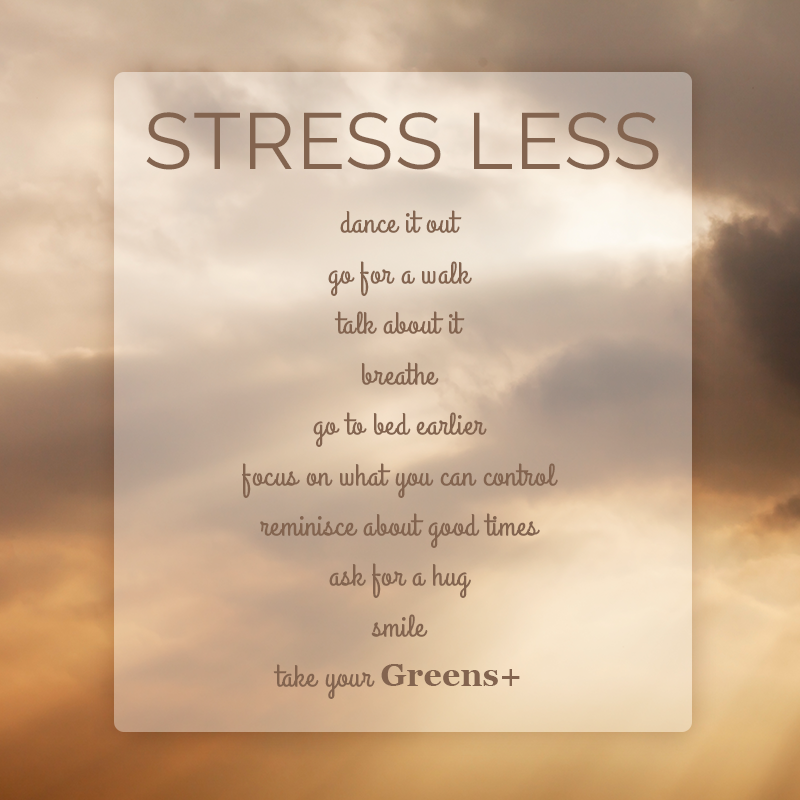
The things that reduce stress with evidence behind them are unglamorous: physical activity, enough sleep, regular contact with other people, time outdoors, and a few slow-breathing protocols. None produces a large effect, and most were tested in trials that would not survive a strict methodological review. That combination (real but modest benefit, imperfect evidence) is the honest summary, and it is more useful than a list of ten tips. What follows is what the randomized and meta-analytic evidence found for each, how big the effects were, and where it runs out.
What stress does in the body
The acute stress response is fast and useful. A perceived threat triggers the sympathetic nervous system, adrenaline rises within seconds, heart rate and blood pressure climb, and attention narrows. A slower hormonal arm follows through the hypothalamic-pituitary-adrenal axis, releasing cortisol over minutes to hours. The problem is not the response but the failure to shut it down.
The National Institute of Mental Health draws a useful line between stress, which is a reaction to an external cause and usually resolves when the situation does, and anxiety, which persists in the absence of an immediate threat. NIMH lists the signs worth noticing: persistent worry, tension, headaches, disrupted sleep, and interference with digestive, cardiovascular and immune function once the state becomes chronic. Almost everything below was tested on ordinary elevated stress in generally healthy people, not as a substitute for treatment.
Exercise has the strongest evidence of anything here
The largest recent synthesis is a 2024 network meta-analysis in The BMJ by Noetel and colleagues, pooling 218 randomized trials, 495 study arms and 14,170 participants. Measured against active controls, the effect sizes for depressive symptoms were:
| Exercise type | Effect size (Hedges’ g) | Trials / participants |
|---|---|---|
| Walking or jogging | -0.62 | 51 / 1,210 |
| Yoga | -0.55 | 33 / 1,047 |
| Strength training | -0.49 | 22 / 643 |
| Mixed aerobic exercise | -0.43 | 51 / 1,286 |
| Tai chi or qigong | -0.42 | 12 / 343 |
| Dance | -0.96 | 5 / 107 |
Two caveats belong beside that table. The endpoint was depressive symptoms, not perceived stress, and the two are related without being the same. And the authors rated their own confidence as low for walking or jogging and very low for everything else, noting that only one included study met the Cochrane low risk-of-bias criteria. The dance figure rests on five small trials and reads as a hint, not a finding.
There is a second, more awkward result. A 2014 review in Sports Medicine by Stults-Kolehmainen and Sinha examined 168 studies of how stress affects activity levels. Among 55 prospective studies, 76.4 percent found that stress predicted less physical activity and more sedentary time, rising to 85.7 percent among the higher-quality studies. Habitually active people tended to keep training under stress; newer exercisers tended to stop. The intervention with the best evidence is the one people abandon exactly when it would help. More on dose in how much physical activity actually matters.
Mindfulness and breathing protocols: real, modest, oversold
The reference point for meditation is Goyal and colleagues’ 2014 systematic review in JAMA Internal Medicine, restricted to randomized trials with active controls, covering 47 trials and 3,515 participants. Mindfulness programs showed moderate evidence of improvement in anxiety, with an effect size of 0.38 at eight weeks falling to 0.22 at three to six months, and in depression, 0.30 falling to 0.23. Evidence for stress and distress specifically was rated low.
The conclusion quoted least is the one that matters most: the review found no evidence that meditation programs were better than any active treatment, including medication, exercise and other behavioral therapies. Meditation beat doing nothing. It did not beat the alternatives. Van Dam and colleagues, in Perspectives on Psychological Science in 2017, cataloged why the wider literature is hard to trust: mindfulness is defined inconsistently, samples are small, active controls are used too rarely, and adverse effects have gone largely unmeasured. A standard MBSR course runs eight weeks, with weekly classes, daily home practice and a full-day retreat, a substantial commitment for roughly 0.3 standard deviations.
Breathing has been studied separately and comes out similarly. Fincham and colleagues, in Scientific Reports in 2023, pooled 12 randomized trials and 785 adults for self-reported stress and found g = -0.35 (95% CI -0.55 to -0.14). Anxiety across 20 trials came out at -0.32, depression across 18 trials at -0.40. The authors were candid: most studies carried a moderate risk of bias, heterogeneity was substantial, and long-term follow-up was scarce. Their trials also mixed slow-paced breathing, extended-exhale patterns and yogic techniques, so the pooled number cannot say which protocol to use. It supports a modest claim: deliberately slowing the breath for a few minutes reduced self-reported stress more than doing nothing, at no cost.
Sleep sits upstream of most of it
The CDC recommends seven or more hours a night for adults aged 18 to 60, and lists elevated stress and mood disturbance among the consequences of falling short. The relationship runs both ways, which is what makes it hard to fix: stress fragments sleep, and short sleep raises next-day emotional reactivity.
The practical levers are unexciting. A fixed wake time seven days a week, light early in the morning, and a hard stop on caffeine far enough from bedtime that it has cleared. Caffeine’s half-life makes an afternoon cup a larger factor than most people assume, a point covered in our piece on coffee and health.
Social connection and time outdoors
The largest analysis of social relationships and health outcomes is Holt-Lunstad, Smith and Layton’s 2010 meta-analysis in PLoS Medicine, covering 148 studies and 308,849 participants. People with stronger social relationships had a 50 percent greater likelihood of survival across the follow-up periods studied, an odds ratio of 1.50 (95% CI 1.42–1.59); multidimensional measures of social integration gave 1.91. These are observational mortality data, not trial data on stress, and causation runs uncertainly. The consistency of the association is still hard to dismiss.
Time outdoors has a smaller evidence base. White and colleagues, in Scientific Reports in 2019, analyzed 19,806 respondents in England and found that people reporting at least 120 minutes a week in natural settings had higher odds of reporting good health (OR 1.59) and high wellbeing (OR 1.23). Below 120 minutes there was no significant association; above roughly 200 to 300 minutes the benefit stopped increasing. It was a cross-sectional survey, so healthy people simply going outside more remains a live explanation.
Where this evidence is weak, and the supplements we will not recommend
Take the honest view of all of the above. Effect sizes cluster between roughly 0.3 and 0.6 standard deviations. Comparators are often waitlists or usual care rather than credible active controls, which inflates results. Nobody can blind a participant to whether they are exercising or meditating. Outcomes are almost entirely self-reported on questionnaires whose purpose respondents can guess. Trials are short, follow-up past six months is rare, and publication bias in this field is well documented.
The supplement side is weaker still, and this is where the previous version of this article went wrong. It told readers that ingredients in a green superfood powder “have been proven to eliminate anxiety and reduce stress.” That was not supported when it was published and it is not supported now. We are withdrawing it, and nothing on this site should be described that way again.
The adaptogen category gets the same treatment. NCCIH’s assessment of ashwagandha is that some preparations may be effective for insomnia and stress, but that trials were typically small and tested different formulations, and that a number of liver injury cases have been linked to ashwagandha supplements. On rhodiola, NCCIH is blunter: there is not enough reliable evidence to determine whether it is useful for any health-related purpose, and most human research is low-to-moderate quality. Claims that these herbs lower cortisol or raise resistance to stress run well ahead of the data. Anyone weighing a supplement anyway should read our notes on supplement quality and manufacturing first.
When stress warrants professional help
There is a threshold at which self-management is the wrong tool, and it deserves more than a footnote. NIMH’s guidance is that professional help is warranted when stress or anxiety symptoms interfere with everyday life, drive avoidance of ordinary activities, or persist constantly rather than tracking a passing situation. Sustained sleep loss, panic symptoms, and stress being managed with alcohol all belong in that category.
The two main treatments are psychotherapy and medication, frequently in combination, and both rest on a stronger evidence base than anything above. Cognitive behavioral therapy in particular has been tested against active comparators far more rigorously than any lifestyle intervention. Asking for it is not an escalation. It is choosing the better-supported option.
Anyone in crisis in the United States can reach the 988 Suicide & Crisis Lifeline by call or text. And some symptoms read as stress but are not: persistent fatigue has physical causes a blood test will find, which we cover in energy without stimulants.
Common questions
How quickly does exercise affect stress?
The trial evidence covers sustained programs over weeks, not single sessions, so the meta-analyses do not measure same-day relief. Most people report feeling better after one walk, but that observation has not been graded the way the program data have.
Is an eight-week mindfulness course worth it?
It depends what it is being compared with. Goyal’s review recorded an effect size of 0.38 for anxiety at eight weeks and found no evidence that meditation outperformed exercise, medication or other behavioral therapies. Anyone who has not yet addressed sleep or activity has cheaper moves available first. For someone who has, MBSR is a reasonable next step with modest expected returns.
Do adaptogens lower cortisol?
Not on evidence anyone should act on. NCCIH concluded that most human research on rhodiola is of low-to-moderate quality and does not establish usefulness for any health purpose, and it flags small trials and inconsistent preparations for ashwagandha. Cortisol is also a poor proxy for how a person feels, since it swings widely across the day.
How much time outdoors is enough?
In the 2019 Scientific Reports analysis the association appeared at 120 minutes a week and stopped improving somewhere between 200 and 300 minutes. Whether that came as one long visit or several short ones made no difference. It was a cross-sectional survey, so 120 minutes is a sensible target rather than a demonstrated threshold.
What this adds up to
Move most days, defend the sleep, see people, get outside, and slow the breath when it gets loud. The effects are small individually, they were measured imperfectly, and they remain the best-supported options available without a prescription. What does not belong on that list is a supplement sold on a stress claim.
What a greens powder can honestly do is help close the vegetable gap in an ordinary week, which is a nutrition question rather than a stress one. If that is useful, Greens Plus has been making them since 1989.
About the Author